 Anguilla
 Antigua and Barbuda
 Grenada
 Bahamas
 Barbados
 Belize
 Dominica
 Guyana
 Haiti
 Jamaica
 Montserrat
 St. Kitts and Nevis
 St. Lucia
 St. Vincent and the Grenadines
 Suriname
 Trinidad and Tobago
 Turks and Caicos

A Tribute to the Life and Legacy of Mrs. Zelma Baizar-Nicholas
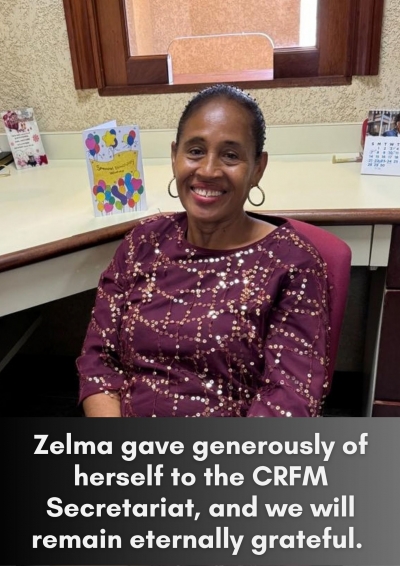
 With profound sadness and heavy hearts, the Caribbean Regional Fisheries Mechanism (CRFM) Secretariat mourns the passing of our beloved colleague, Mrs. Zelma Baizar-Nicholas, whose remarkable 22 years of dedicated service will remain etched in our institution's history and heart. Zelma began her journey with the CRFM Secretariat on October 1, 2004, and, in a deeply poignant turn of events, departed this life on October 2, 2026, just one day after completing 22 years of service. For more than two decades, Zelma was far more than an Office Attendant. She was a cherished member of the CRFM family, a dependable presence, and a quiet yet powerful example of what it means to serve with dignity, humility, loyalty, and love. Through changing times, evolving responsibilities, and our institution's many milestones, Zelma remained a constant source of warmth, kindness, and unwavering commitment. Her work often took place out of the spotlight, but its value was immeasurable, and her contribution to the Secretariat's smooth functioning was irreplaceable.
The true measure of a person's contribution lies not in the position they hold but in the lives they touch, the kindness they share, and the legacy they leave. By that measure, Zelma's contribution was extraordinary. She approached her responsibilities with diligence, pride, and a genuine spirit of service, earning the affection, admiration, and respect of colleagues and all who had the privilege of knowing her. She understood, perhaps better than most, that every role within an institution matters and that excellence is shown not only by great achievements but also by the faithful performance of everyday duties. Zelma embodied this principle throughout her 22 years with the CRFM. She worked harmoniously with everyone, treated others with respect, and helped create the welcoming, supportive environment that made the Secretariat more than a workplace. While time may soften the pain of her absence, it will never diminish the significance of her presence. The offices she cared for will continue to serve our institution, but the warmth, dedication, and humanity she brought to them can never be replaced.
On behalf of the entire CRFM family, we extend our deepest condolences to Zelma's family, relatives, friends, and loved ones during this profoundly difficult period of bereavement. We recognize that while we have lost a treasured colleague, her family has lost someone whose love, presence, and companionship were beyond measure. We stand in solidarity with them, share their sorrow, honor her memory, and offer our unwavering thoughts, prayers, and support as they navigate the difficult days ahead. May they find comfort in knowing that Zelma lived with purpose, that her service was deeply appreciated, and that her legacy will endure in the hearts of all who knew her. Twenty-two years of faithful service cannot be measured merely in days, months, or years; they must be measured in the countless acts of dedication, kindness, and quiet sacrifice that made a lasting difference. Zelma gave generously of herself to the CRFM Secretariat, and we will remain eternally grateful. Though her earthly journey has ended, her memory will continue to inspire us, reminding us that a life devoted to service leaves an enduring legacy. Rest peacefully, dear Zelma. You served with distinction, were loved beyond words, and will be remembered with gratitude, affection, and respect.
May her soul rest in eternal peace.
- The Management and Staff of the Caribbean Regional Fisheries Mechanism (CRFM) Secretariat
From Sea to Market: Eastern Caribbean Fishers Explore Belize’s Lobster Industry and Regional Trade Opportunities
By Dr. Marc Williams, CRFM Executive Director

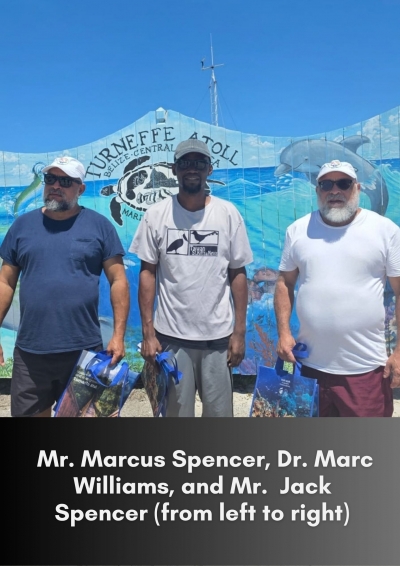
Mr. Marcus Spencer, Dr. Marc Williams, and Mr. Jack Spencer (from left to right)
A fisheries exchange in Belize has brought fishers and seafood businesspeople from the Eastern Caribbean face-to-face with Belizean fishers, cooperatives, fisheries managers, and conservation partners, sparking new conversations about how the Caribbean can strengthen trade in lobster and other seafood products while learning from successful fisheries management practices across the region.
From September 15–19, 2026, Mr. Jack Spencer and Mr. Marcus Spencer of St. Kitts and Nevis, along with Mr. Calvin Josiah of St. Martin, visited Belize to examine the country's lobster industry and explore opportunities to increase trade in fish and fish products between Belize and the Eastern Caribbean.
The Caribbean Regional Fisheries Mechanism (CRFM) and the Caribbean Network of Fisherfolk Organisations (CNFO) coordinated the week's program, with support from government agencies, fisher cooperatives, conservation partners, and local fishers in Belize.
The exchange took participants from cooperative processing facilities and government offices to fishing camps and co-management sites on Turneffe Atoll, offering a rare opportunity to follow Belize's lobster industry from sea to market.
Seeing the lobster value chain first-hand
The program began on September 15 with a meeting with the Belize Fishermen Cooperative Association (BFCA) Ltd., during which participants exchanged experiences and discussed the operations of Belize's fishing cooperative sector.
The delegation subsequently toured the facilities of the National Fishermen Producers Cooperative Society Ltd. (NFPCSL) and the Northern Fishermen Cooperative Society Ltd. (NFCSL).
The visits provided firsthand exposure to lobster receiving, handling, processing, and market preparation. Participants observed how value is added after lobster arrives at the cooperative and how the product moves through the supply chain to consumers.
The discussions also examined the role of cooperatives in organizing fishers, maintaining product quality, facilitating market access, and generating greater economic value from fisheries resources.
For the visiting fish businesspeople, the experience provided an opportunity to explore potential commercial relationships with Belizean suppliers and to understand better what would be required to increase the movement of lobster and other seafood products between Belize and Eastern Caribbean markets.
Understanding how Belize manages its fisheries
On September 16, the delegation met with representatives of Belize's Ministry of the Blue Economy. Participants received an overview of the history and development of the country's lobster fishery, its operations, and the legal and institutional mechanisms governing the industry.
Later that day, the group met with the CRFM for a broader regional discussion on lobster fisheries, seafood markets, and the opportunities and challenges of expanding intra-Caribbean trade in fish and fish products.
The program continued September 17 with detailed discussions hosted by the Belize Fisheries Department. Participants examined lobster and other fisheries operations, management arrangements, trade requirements, legislation, and compliance and enforcement.
These discussions underscored a central message of the exchange: building a profitable fisheries sector must go hand in hand with the responsible management of the resources that fishers, businesses and coastal communities depend on.
The Belize Fisheries Department, the Turneffe Atoll Sustainability Association (TASA), and CRFM also finalized arrangements for the delegation to observe fisheries management and lobster operations at Turneffe Atoll directly.
Taking the exchange to the fishing grounds
On September 19, the program moved from meeting rooms to the sea as TASA led the delegation on a field visit to Turneffe Atoll, supported by the Belize Fisheries Department, CRFM, and Belizean fisher Jason Young.
At Mr. Young's lobster fishing camp, participants saw how lobster traps are constructed and learned about the preparations Belizean fishers make for the lobster season. The encounter provided an opportunity for direct fisher-to-fisher exchange on fishing methods, practical experience, and the realities of operating a lobster fishing business.
The delegation then visited the Caye Bokel co-management site, which supports fisheries management in the southern portion of the Turneffe Atoll Marine Reserve, followed by Calabash Caye, a co-management site serving the reserve's middle portion.
The field experience underscored the importance of partnerships among fishers, government, and conservation organizations for sustainably managing valuable fisheries resources.
Participants see potential for wider Caribbean exchanges
The visiting delegation praised the hospitality and openness of the organizations and individuals who supported the program.
Jack Spencer expressed appreciation for the willingness of Belizean fisherfolk, the Government of Belize, TASA and CRFM to accommodate the delegation and openly share their experiences.
Marcus Spencer said he was impressed by the fisheries management practices he observed and would like other Caribbean fishers to benefit from similar opportunities.
“The fisheries in Belize are well managed, and I would love for other fishers in the Caribbean to have similar experiences,” Spencer said.
Calvin Josiah highlighted the potential for greater fisheries trade between Belize and the Eastern Caribbean, while noting that transportation and logistics will be critical to transforming commercial interest into sustainable trade.
The observation points to a wider challenge facing intra-regional seafood commerce: ensuring that transportation, cold-chain systems, distribution arrangements and other logistics can efficiently connect producers with Caribbean markets.
Connecting Caribbean fishers, businesses, and markets
The Belize exchange demonstrated the value of practical fisher-to-fisher, cooperative-to-cooperative, and business-to-business exchanges to strengthen Caribbean fisheries. Such initiatives can enable fishers to learn techniques directly from their counterparts, expose fisheries entrepreneurs to processing and value-addition opportunities, strengthen relationships among cooperatives, and connect seafood producers with prospective buyers.
The visiting fishers and businesspeople thanked the BFCA, NFPCSL, NFCSL, the Ministry of the Blue Economy, the Belize Fisheries Department, TASA, CNFO, and CRFM, as well as the local fishers and other partners who contributed to the program. The delegation expressed hope that the visit will mark the start of longer-term cooperation between Belize and fisheries stakeholders in St. Kitts and Nevis, St. Martin, and the wider Caribbean.
The opportunity extends beyond lobster. Stronger regional connections could support increased trade in Caribbean seafood, greater value addition, stronger fisheries enterprises, improved food and nutrition security, and more resilient livelihoods for fishing communities. For fishers and fisheries entrepreneurs elsewhere in the region, the Belize experience also invites them to imagine what similar exchanges could achieve.
The Caribbean Sea does not have to separate the region's fishing communities and markets. Through greater cooperation, knowledge exchange, and trade, it can increasingly become the link that connects them.
Dr Shelly Ann Cox - A Food Hero: Putting people at the heart of fisheries
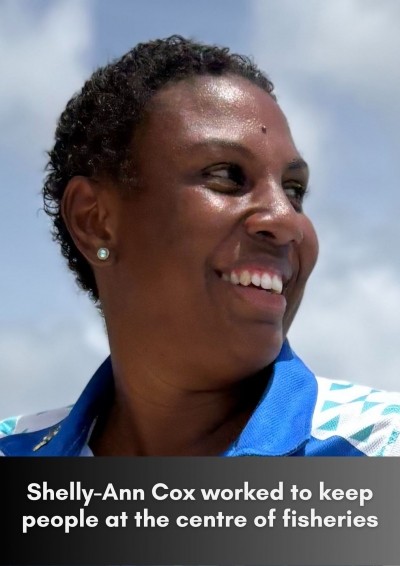
As Barbados’ youngest Chief Fisheries Officer, Shelly-Ann Cox helped connect policy, science and the realities of fishing communities, contributing to more sustainable and resilient fisheries in Barbados and across the Caribbean.
Shelly-Ann Cox worked to keep people at the centre of fisheries, connecting the sustainable management of marine resources with the livelihoods and resilience of the communities that depend on them.

Photo © Courtesy of Barbados' Fisheries Division
On any given day, Shelly-Ann Cox could have been found where the work of fisheries mattered most: alongside the people whose livelihoods depended on the sea.
She understood that fisheries was never simply boats, fish and the ocean. It was about families putting food on the table, communities nurturing cultural identity and safeguarding heritage, sustaining livelihoods, and a country protecting the marine resources that would sustain generations to come.
As Barbados’ youngest Chief Fisheries Officer, Shelly-Ann Cox worked to make that future more secure. Her work focused on sustainable fisheries management, responsible aquaculture, climate resilience and stronger coastal communities, bringing together fisherfolk, government agencies, regional institutions and international partners to help ensure that the Caribbean’s aquatic resources could continue to nourish its people.
Read the full article here.
Caribbean Fisheries Ministers approve new protocols on marine spatial planning, IUU fishing, and seafood traceability
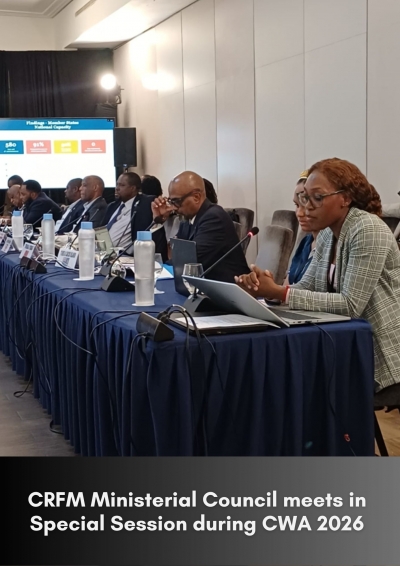
Trelawny, Jamaica, 29 September 2026 (CRFM)—The Ministerial Council of the Caribbean Regional Fisheries Mechanism (CRFM) convened its 17th Special Meeting at the Ocean Coral Spring Resort in Trelawny, Jamaica, on Monday, 28 September 2026, during the 20th Caribbean Week of Agriculture. Under the chairmanship of Antigua and Barbuda, the Ministers responsible for fisheries, aquaculture, and the blue economy approved twelve resolutions, solidifying their decisions regarding the future policy direction of the region’s fisheries and aquaculture sector with respect to data and information, marine spatial planning, traceability across seafood value chains, and illegal, unreported, and unregulated (IUU) fishing.

Delegation heads from CRFM Member States at the end of the 17th Special Meeting of the Ministerial Council in Jamaica (Photo – CRFM Secretariat)
In his opening remarks, the Chair of the CRFM Ministerial Council, Hon. Randy Baltimore, Minister of State in the Ministry of Agriculture, Lands, Fisheries and the Blue Economy, Antigua and Barbuda, said that this year’s theme for Caribbean Week of Agriculture, ‘The New F.A.C.E. of Caribbean Food Systems,’ focusing on Food Security, Agri-Business, Climate-Smart Technologies, and Export Expansion, speaks directly to the CRFM’s work.
“Fisheries and the blue economy must remain an integral part of each of these pillars,” Minister Baltimore said. “Our fisheries sector contributes not only to food and nutrition security, but also to livelihoods, trade and the economic resilience of our coastal communities. Yet we continue to face challenges from climate change; marine resource pressures; illegal, unreported and unregulated fishing; and changing market conditions.”

Minister Baltimore addressing the Council, flanked by CRFM Executive Director, Dr. Marc Williams (left), and Deputy Executive Director, Dr. Sandra Grant. (Photo – CARICOM Secretariat)
The CRFM Secretariat briefed the Ministers on status and trends in the sector. CRFM Statistics and Information Analyst, Mrs. June Masters, informed the Council that the most current regional data indicate that over half-a-million people are employed in the sector across the 17 CRFM Member States, including approximately 133,000 fishers and 5,000 aquaculture workers. She reported that over the five-year period spanning 2020 to 2025, each Member State reported steady growth in sector employment.
Meanwhile, the data indicate that the total ex-vessel value of fish produced by the region’s domestic fleet, representing the prices that fishers receive directly for their catch across over 30,000 vessels, almost doubled, presumably due to increased market prices. Mrs. Masters said that over the five-year period, this value increased from US$431 million to US$856 million, representing growth of 99%. At the same time, though, the total weight of the catch increased less dramatically, by 14%, from approximately 141,000 tons to approximately 160,000 tons.

Representatives from Haiti, the host country – Jamaica, and Montserrat were among the policymakers who attended the Special Council meeting. (Photo – CARICOM Secretariat)
This is the backdrop against which the Ministerial Council discussed policies and the strategic direction of the sector, as well as the capacities of the CRFM Secretariat and its Member States to steer the sector’s sustainable growth and development. They deliberated on a recently concluded training and capacity needs assessment conducted by the CRFM in partnership with GRÓ Fisheries Training Programme under the auspices of UNESCO. The Council, which had commissioned the assessment, committed to taking prompt action to help bridge the capacity gaps.
Another important highlight of the Council meeting was the approval of three new protocols to the Caribbean Community Common Fisheries Policy (CCCFP). These are the Protocol on Marine Spatial Planning (MSP), the Protocol on Aquatic Foods Traceability, and the Protocol on Combating Illegal, Unreported and Unregulated (IUU) Fishing.
Reflecting on this milestone, CRFM Executive Director, Dr. Marc Williams, said: “Adopting these three new protocols marks a major step toward strengthening the governance, sustainability, and economic resilience of the Caribbean’s fisheries and marine resources. Together, the new CCCFP protocols on marine spatial planning, aquatic foods traceability, and combating illegal, unreported, and unregulated fishing give our Member States stronger regional frameworks to manage competing uses of our ocean space, build confidence and transparency in Caribbean seafood, and protect our fisheries from illegal activities.”
He added that these protocols also help safeguard the livelihoods of legitimate fishers, improve market access, strengthen food and nutrition security, and ensure that the benefits derived from our marine resources are shared sustainably.
“Importantly, these protocols demonstrate the Caribbean Community’s commitment to moving from policy to coordinated action and to building a modern, integrated, and resilient fisheries governance system. Our objective is clear: to protect the Caribbean’s fisheries and ocean resources while creating greater economic opportunities and securing their benefits for present and future generations,” Dr. Williams concluded.
In closing the Special Meeting of the Council, Minister Baltimore said: “Our countries face many shared challenges, but each also brings valuable experience and ideas to the table. I ask that we continue to learn from one another, share approaches that work, and follow through on the decisions made here. That is how we will build a stronger fisheries sector and a blue economy that creates lasting benefits for our fisherfolk and coastal communities.”
The CRFM Ministerial Council will also be represented at this Friday’s 127th Special Meeting of the Council for Trade and Economic Development (COTED) – Agriculture, which concludes the 20th Caribbean Week of Agriculture in Jamaica.
CRFM Executive Director addresses FAO’s Committee on Fisheries (COFI) in Rome
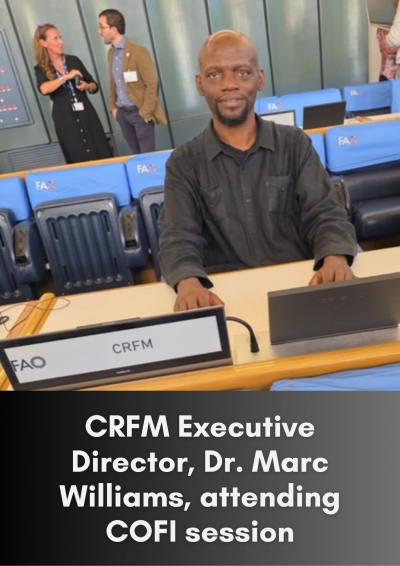

Belize City, Belize, 15 September 2026 (CRFM)—The Executive Director of the Caribbean Regional Fisheries Mechanism (CRFM), Dr. Marc Williams, recently attended the Thirty-seventh Session of the Committee on Fisheries (COFI), a body under the FAO Council. During the weeklong meeting, held from 7–11 September 2026 in Rome, Italy, Dr. Williams spoke on the state of fisheries and aquaculture; illegal, unreported, and unregulated (IUU) fishing; the role of regional fisheries bodies; and support for small-scale fisheries and aquaculture.
In speaking on the state of world fisheries and aquaculture and progress in the implementation of the Code of Conduct for Responsible Fisheries and related instruments, Williams said: “When FAO speaks of Blue Transformation, science-based governance, resilient aquatic food systems, and sustainable value chains, it speaks directly to the vision that CRFM Member States have embraced.”
He added that reliable statistics, stock assessments, digital information systems, electronic logbooks, traceability, and interoperable fisheries databases are the essential infrastructure of responsible management in the twenty-first century.
“The CRFM stands ready to work alongside FAO and all our international partners to ensure that the Blue Transformation becomes a living reality that delivers prosperity, resilience, food security, and hope for generations yet to come,” Williams said.
He also spoke on progress in addressing IUU fishing through international, regional and national actions, adding that: “Illegal, unreported, and unregulated fishing is an assault on justice, sustainability, and the dignity of those who harvest our marine resources responsibly.”
He said that confronting IUU fishing requires resolve, regional solidarity, and international cooperation that leaves no haven for illegal operators.
“History shows that those who exploit our oceans often cooperate across jurisdictions; therefore, those who protect them must cooperate even more closely. Let us strengthen our commitment to the Port State Measures Agreement, reinforce collaboration through Regional Fishery Bodies, advance implementation of the BBNJ Agreement, and continue our shared pursuit of Sustainable Development Goal 14,” Williams said.
He affirmed the CRFM’s determination to work alongside the FAO and the wider international community to build a future where responsible fishers are rewarded, illegal operators are denied opportunities, and the rule of law extends across every ocean, coastline, and fisheries value chain.
The CRFM Executive Director also spoke on the role of the FAO and other regional fisheries bodies in supporting implementation of international agreements relevant to fisheries and aquaculture.
He noted that the expanding international architecture for fisheries and ocean governance places growing expectations on regional organizations. This architecture includes the Agreement under the United Nations Convention on the Law of the Sea on the Conservation and Sustainable Use of Marine Biological Diversity of Areas Beyond National Jurisdiction (or the BBNJ Agreement), biodiversity commitments, trade obligations, climate adaptation, and sustainable development.
“The CRFM embraces these responsibilities because we recognize that effective governance depends on strong institutions that can integrate science, digital innovation, fisheries statistics, compliance, ecosystem-based management, and stakeholder engagement into coherent regional action,” Dr. Williams said, adding that “Together with FAO, our sister Regional Fishery Bodies, and our international partners, we can build governance systems that are adaptive to climate change, responsive to emerging challenges, and firmly anchored in cooperation rather than competition.”
He said that small-scale fisheries and aquaculture are indispensable pillars of nutrition, employment, cultural identity, poverty reduction, and resilience. He reaffirmed the CRFM’s commitment to working with the FAO, CRFM Member States, and development partners to build inclusive, climate-resilient, technologically advanced, and socially just fisheries and aquaculture sectors.
CRFM and NFA Jamaica collaborate to host Caribbean Fisheries and Aquaculture Forum
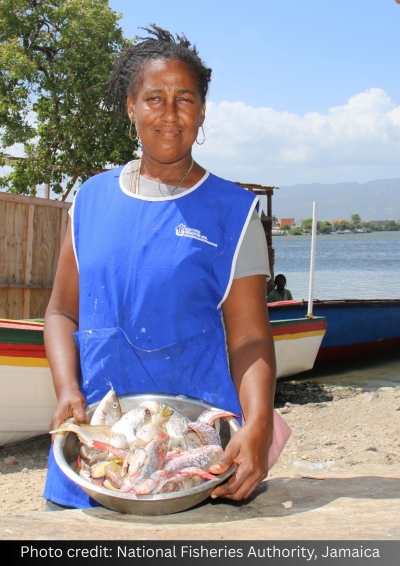
The Caribbean Regional Fisheries Mechanism (CRFM) Secretariat is pleased to announce that the National Fisheries Authority (NFA) of Jamaica is partnering with us to host a Forum for fishers—this time in Jamaica. The in-person event will be held during the 20th Caribbean Week of Agriculture, under the auspices of the Caribbean Community (CARICOM) Secretariat. The theme for this year's CWA is: “The New F.A.C.E. of Caribbean Food Systems – Transformation and Resilience.”
F.A.C.E. stands for:
- Food Security
- Agri-Business Development
- Climate Smart Technologies and
- Export Expansion
The CRFM and NFA hope that the Forum will help to guide the way forward to leveraging the lessons learned and the opportunities available to improve climate resilience and disaster management in the Caribbean’s fisheries and aquaculture sector. Adopting clean energy in the sector as well as strengthening alternative value chains for seamoss and pelagic species are among the key topics that will be featured at the upcoming Forum.

In addition to engaging fishers on new opportunities to gain more benefits from the sector, the Forum will also feature a special awards ceremony to honor the contributions made by fishers in Jamaica, including women and youth.
Please note that registration is required to attend the event, to be hosted at Ocean Coral Spring Resort, Trelawny, Jamaica.
Click here to register.
Photos courtesy: National Fisheries Authority, Jamaica.
Seminar on Improving Traceability in the Agri-Food Sector to be held during CWA 2026
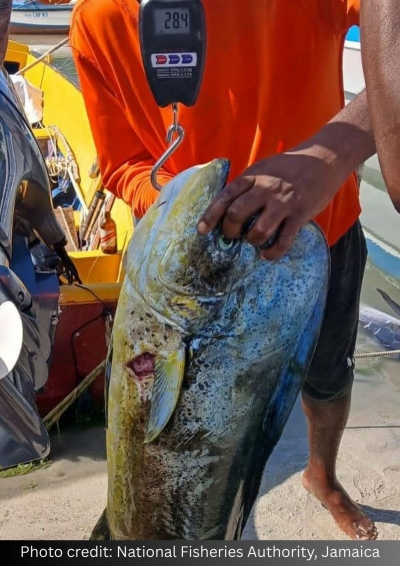
Traceability is a proven tool to enhance transparency, support compliance with international standards, and empower regulators, fishers, and farmers alike.
There is a need for a harmonized traceability framework across the Caribbean that will maintain 100% traceability throughout the food supply chain from harvest to consumer, both for domestic and international markets.
The Caribbean Regional Fisheries Mechanism (CRFM) is teaming up with its regional and international partners to host the upcoming traceability seminar, an in-person event to be convened during the 20th Caribbean Week of Agriculture.

The objectives of the traceability seminar are to:
- Raise awareness about traceability in the agri-food system;
- Share knowledge about the requirements for traceability by importing countries; and
- Support traceability capacity-building for the fisheries, aquaculture, and agriculture sectors.
Please note that registration is required to attend the event, to be hosted at Ocean Coral Spring Resort in Trelawny, Jamaica.
Click here to register.
Photos courtesy: National Fisheries Authority, Jamaica.
CRFM Supports Regional Queen Conch Mission in the Turks and Caicos Islands
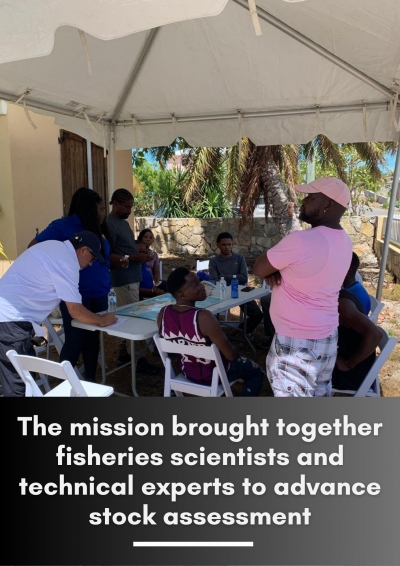
Providenciales, Turks and Caicos Islands, 31 July 2026 (CRFM)— The Caribbean Regional Fisheries Mechanism (CRFM), in collaboration with the Turks and Caicos Islands Department of Fisheries and Marine Resources Management (DFMRM), is supporting a regional technical mission this week to strengthen the sustainable management of the Caribbean's valuable queen conch fishery.
The mission brings together fisheries scientists and technical experts from the Turks and Caicos Islands, the Jamaica National Fisheries Authority (NFA) and the United Kingdom to advance stock assessment methods, review fisheries data, conduct field activities, and engage stakeholders in developing science-based management measures.

The initiative supports the Turks and Caicos Islands Government's commitment to sustainable fisheries and resilient coastal livelihoods by strengthening the scientific foundation for the long-term management of one of the country's most economically and culturally important marine resources. It also reinforces regional cooperation and knowledge exchange among Caribbean fisheries institutions.

Kathy Lockhart, the Assistant Director of the DFMRM, expressed appreciation for the collaboration and highlighted the valuable contribution of Dr. Paul Medley who had completed the queen conch stock assessment and developed options for management including Harvest Control Rules. She is also looking forward to continued collaboration with the Jamaica NFA and the completion of a queen conch underwater survey in the Turks and Caicos Islands.
Through initiatives such as this, the CRFM continues to work with its Member States and partners to promote sustainable fisheries, healthy marine ecosystems and prosperous coastal communities across the Caribbean.
CRFM Working Group Takes Stock of Groundfish with Data-limited Assessment
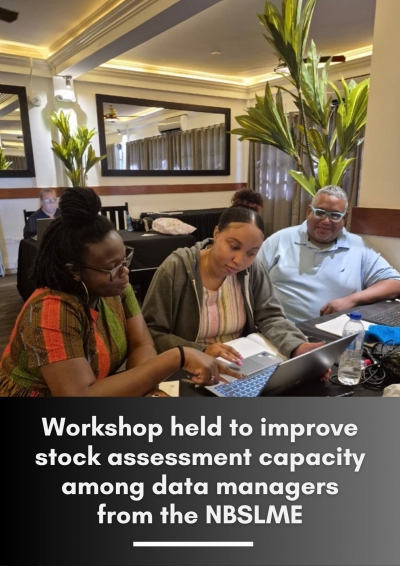
Georgetown, Guyana, 12 August 2026 (CRFM)—Fisheries professionals from countries within the North Brazil Shelf Large Marine Ecosystem (NBSLME) are better equipped to assess groundfish species using length-based data for actionable management advice that will bolster the sustainability of the region’s fisheries. This 5-day training and capacity-building workshop on Data-limited Assessment of the Groundfish Stocks in the North Brazil Shelf Large Marine Ecosystem was convened from August 3-7, 2026, at the Grand Coastal Hotel in Georgetown, Guyana.

Participants after the opening of the CRFM-CSWG Data-limited Assessment of the Groundfish Stocks in the North Brazil Shelf Large Marine Ecosystem in Guyana
The hands-on event was convened by the Caribbean Regional Fisheries Mechanism (CRFM) through the CRFM Continental Shelf Fisheries Working Group (CRFM-CSWG), which collaborated with two institutional partners—the University of the West Indies-managed EAF4SG Project and the FAO-WECAFC Shrimp and Groundfish Working Group—working along with the national fisheries authorities of three CRFM Member States: Guyana, Suriname, and Trinidad and Tobago. The session also drew participation from Brazil and Venezuela.
CRFM Deputy Executive Director, Dr. Sandra Grant, said: “The CRFM hopes—through this series of stock assessment trainings held since 2023—to improve stock assessment capacity among data managers from the NBSLME. This will be evidenced by their enhanced knowledge and application of stock assessment methods and data-limited software tools in R.”

Workshop attendees discussed the groundfish data and analyses
Workshop participants were exposed to training in the collection and analysis of length data, and in developing technical management advice based on the analyses derived from them. The advice would address appropriate precautionary adjustments to harvest levels that are consistent with management objectives, as well as the subsequent monitoring of management controls. Training in management advice covered appropriate practical controls, such as technical gear changes, closed areas and seasons, as well as overall effort and catch limits.

CRFM Statistics and Information Analyst, Mrs. June Masters, crunching numbers as she analyses length-data
"This workshop represents another important milestone in our ongoing collaboration with the Caribbean Regional Fisheries Mechanism (CRFM). In March 2025, we partnered to deliver similar training for participants from Guyana, Suriname, and Trinidad and Tobago. We are very pleased to again in 2026, cosponsor this very important and much needed workshop in partnership with the CRFM,” said Mrs. Nerissa Lucky, Technical & Project Coordinator, EAF4SG project (Enhancing capacity for the adoption and implementation of the Ecosystem Approach to Fisheries in the shrimp and groundfish fisheries of the North Brazil Shelf Large Marine Ecosystem).
Ms. Gitanjali Chandarpal, Assistant Representative, the United Nations Food and Agriculture Organization (FAO), added that, “Maintaining sustainable fisheries is crucial, and reliable stock assessments are the cornerstone of sustainable fisheries management. Even where data is limited, robust scientific methods allow us to reduce uncertainty, support evidence-based decision-making and apply precautionary approaches that safeguard both marine ecosystems and the livelihoods that depend upon them.”
Mrs. Selvine Stephenson-Grant, Deputy Programme Manager, Agricultural & Agro-Industrial Development, Caribbean Community (CARICOM) Secretariat, noted that, “Through the work of the Caribbean Regional Fisheries Mechanism, Member States continue to pursue greater cooperation in the sustainable use and management of shared fisheries resources. As the Community advances implementation of initiatives aimed at strengthening regional food systems, sustainable fisheries will continue to play an increasingly important role in ensuring healthy diets, supporting livelihoods, and building resilience across the Caribbean.”
She conveyed commendations from the CARICOM Secretariat to the CRFM Secretariat, the Government of Guyana, the FAO, the EAF4SG Project, and all participating Member States and partners for their continued leadership and commitment to sustainable fisheries management.
Ms. Desha Husbands, Fisheries Officer, who addressed participants on behalf of the Government of Guyana, said: “We cannot manage what we cannot measure, and we cannot manage what we don't know. This training workshop, facilitated by the CRFM and the EAF4SG project, addresses this need by strengthening our technical capacity through the ecosystem approach to fisheries. We can now move from a point of intuition to a point of evidence-based management.”

Dr. Tomas Willems (left) with Dr. Paul Medley at CSWG workshop
The expected outcomes of the training and capacity-building workshop on Data-limited Assessment of the Groundfish Stocks in the North Brazil Shelf Large Marine Ecosystem include:
- Improved stock assessment capacity among data managers;
- Stock assessment reports produced for completed assessments;
- Improved groundfish data collection methods, featuring updated protocols to support more accurate stock assessments;
- Enhanced understanding of the use of length-based assessment methods to support fisheries management decision-making;
- Increased capacity to apply precautionary approaches in recommending harvest adjustments and management measures using Management Strategy Evaluations; and
- Increased capacity to develop appropriate fisheries management controls, including gear modifications, closed seasons or areas, effort controls, and catch limits.
Dr. Tomas Willems, Head of Research & Statistics, Suriname Fisheries Department, said: “A key takeaway is that, although length-based methods do not require the long historical time series of data needed for many traditional stock assessment models, the data must still be of high quality and collected through rigorous, well-designed sampling programs. Furthermore, a sound understanding of the life history and biology of the species being assessed remains essential for obtaining reliable results.”
Dr. Paul Medley, the consultant who delivered the training, said: “It's been very productive. We made a lot of progress again. I hope that we can sustain this level of effort in trying to determine stock status. We are also developing appropriate methods for the Caribbean, so that we can monitor our stocks, our fisheries, and move towards more sustainable use.”
###
Request for Expressions of Interest - National Consultancy to update the Management Plan for the San San Pond Sak National Wetland Park, Panama
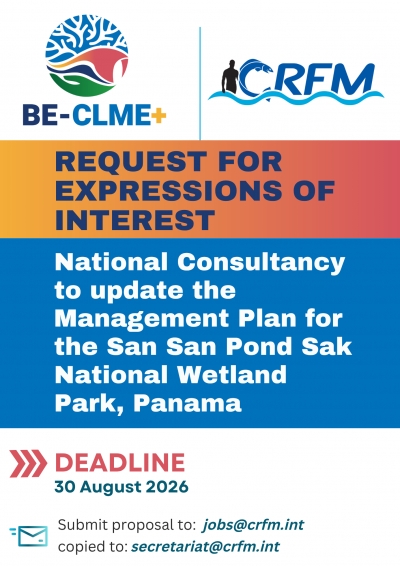
BE-CLME+ Project: Promoting National Blue Economy (BE) Priorities Through Marine Spatial Planning in the Caribbean Large Marine Ecosystem Plus (GEF Project ID 10211)
| DATE: | 31 July 2026 |
| TITLE: | National Consultancy to update the Management Plan for the San San Pond Sak National Wetland Park, Panama |
| CATEGORY: | Consultancy |
| PROJECT/ORGANIZATION: | CRFM |
| DEADLINE: | 30 August 2026 |
| REQUEST FOR EOI: | CLICK HERE (English Version) CLICK HERE (Spanish Version) |
| TERMS OF REFERENCE: | CLICK HERE (English Version) CLICK HERE(Spanish Version) |
| STATUS: | Open |