 Anguilla
 Antigua and Barbuda
 Grenada
 Bahamas
 Barbados
 Belize
 Dominica
 Guyana
 Haiti
 Jamaica
 Montserrat
 St. Kitts and Nevis
 St. Lucia
 St. Vincent and the Grenadines
 Suriname
 Trinidad and Tobago
 Turks and Caicos

Stakeholders engage to translate Belize’s sustainable ocean priorities into coordinated action

Belize City, Belize, Tuesday, 20 October 2026 (CRFM)—Stakeholders from across Belize’s governance, regulatory and ocean management landscape are meeting in Belize City for the Belize Sustainable Ocean Plan (BSOP) Implementation and Monitoring Plan Validation and Co-Design Workshop, an important step towards translating the country’s sustainable ocean priorities into practical, coordinated and implementable actions.

Representatives of key government ministries, departments, and regulatory agencies are among the stakeholders attending the two-day BSOP workshop.
Photo: BE-CLME+ Project
The workshop is being led by the Coastal Zone Management Authority and Institute (CZMAI) with support from the BE CLME+ Project and over the next 2 days, brings together representatives of key government ministries, departments, regulatory agencies and other stakeholders that have responsibilities for, or will be affected by, implementation of the BSOP.
The workshop moves beyond consultation to focus on validation, feasibility testing and co-design. Participants are critically reviewing the proposed implementation and monitoring arrangements to determine what will be required to translate the BSOP’s strategic priorities into coordinated action.
Through facilitated discussions and working sessions, stakeholders are examining the feasibility of proposed actions and generating clear recommendations and decisions on:
- priority actions for implementation;
- the roles and responsibilities of relevant government and regulatory agencies;
- institutional and inter-agency coordination arrangements;
- environmental, social and other relevant safeguards;
- human, technical and financial resource requirements;
- practical considerations that could enable or constrain implementation; and
- arrangements for monitoring progress and supporting accountability.

Attendees brainstorm to strengthen implementation and monitoring.
Photo: BE-CLME+ Project
A key focus of the workshop is ensuring that the proposed Implementation and Monitoring Plan reflects the realities of the agencies and stakeholders that will ultimately be responsible for delivering the BSOP. This participatory approach provides an opportunity to identify potential implementation challenges early, clarify institutional responsibilities and strengthen ownership of the actions proposed.
The BE CLME+ Project’s support for the initiative contributes to wider efforts to strengthen sustainable Blue Economy development and integrated ocean governance across participating Caribbean countries. In Belize, this support is helping to strengthen the enabling conditions needed to put national ocean priorities into practice.
CRFM calls for investment-ready clean energy solutions across Caribbean fisheries

Panama City, Panama, Monday, 19 October 2026 (CRFM)—Renewable energy investments in Caribbean fisheries and aquaculture must do more than install equipment: they must deliver reliable, affordable services that protect livelihoods and strengthen businesses. That was the message shared by the Caribbean Regional Fisheries Mechanism (CRFM) at the Caribbean Renewable Energy Forum (CREF) 2026, held in Panama City from 14 to 16 October.
Presenting one of three case studies in a session on renewable energy investment in Caribbean industry and productive sectors, Mr. Sherron Barker, Regional Project Coordinator of the CRFM’s STAR-Fish Project, outlined how ice plants, cold storage, fish processing, aquaculture and other fisheries operations can benefit from cleaner energy. His case study, “Smaller Productive Users: Renewable Energy Across the Fisheries Value Chain,” also examined how demand spread across smaller operators can be brought together to create viable investment opportunities.

Mr. Sherron Barker presenting at CREF 2026
Photo courtesy event organizers
“The point is the services that clean energy enables,” Barker said. “We also need arrangements that keep these services affordable, maintained and accessible to the people who use them.”
He explained that energy costs and reliability affect livelihoods at each stage of the value chain-from fuel used on fishing trips and ice at landing sites to refrigeration, processing, and pumping and aeration in aquaculture. Decisions about renewable energy must therefore consider fish losses avoided, product quality maintained, savings achieved and whether operators can afford the service over time.
“The opportunity therefore extends beyond replacing grid electricity with solar panels. The question is whether a dependable energy service can protect production and income at a cost users can sustain. The business case must capture reliable ice and cooling, losses avoided and energy savings,” Barker added.

(Left to right) Mr. Ragunauth Ramsaroop, AGM Inc., Liaison Director; Mr. Mike Murray, Generac Power Systems, Director - Microgrid Solutions; Mr. Sherron Barker, Caribbean Regional Fisheries Mechanism, Regional Project Coordinator, STAR-Fish; and Ms. Christina Becker-Birck, Cadmus Group, Vice President, Moderator.
Photo courtesy event organizers
He highlighted three ongoing STAR-Fish workstreams that can help turn these needs into investable projects. These include an assessment of renewable energy and energy efficiency needs and the selection of at least four fisheries value chains; the development of business models for renewable energy options and fish-processing operations; and work on financing models and investment opportunities. Together, these activities examine technical feasibility, operating costs, maintenance responsibilities, users’ ability to pay, and investment readiness.
“STAR-Fish can work with countries to prepare the site evidence and test business cases. What we need is a sharper understanding of market requirements,” Barker said.
He encouraged dialogue among developers, service providers, financiers and country partners. Developers can help identify the scale and common specifications needed to serve multiple sites; service providers can define maintenance and service requirements; financiers can clarify revenue, security and risk-sharing arrangements; and country partners can shape ownership and user-fee models that keep shared assets operating while preserving fair access for fishers, vendors and processors.
“The immediate opportunity is to bring these requirements into the STAR-Fish assessments while they are underway,” Barker explained. “That way, the eventual business cases can answer the questions investors ask and serve the fisheries users who depend on the facilities.”
###
About the STAR-Fish Project
Developed by the CRFM and funded by Global Affairs Canada, the four-year CAD 4.324 million Sustainable Technologies for Adaptation and Resilience in Fisheries (STAR-Fish) Project supports a gender-responsive, inclusive transition to lower-carbon and climate-resilient fisheries. It works in Belize, Dominica, Grenada, Guyana, Jamaica, Saint Lucia, Saint Vincent and the Grenadines, and Suriname, and includes support for low-carbon or carbon-neutral fisheries certification, technical collaboration and knowledge exchange.
Caribbean Fisheries Ministers approve new protocols on marine spatial planning, IUU fishing, and seafood traceability

Trelawny, Jamaica, 29 September 2026 (CRFM)—The Ministerial Council of the Caribbean Regional Fisheries Mechanism (CRFM) convened its 17th Special Meeting at the Ocean Coral Spring Resort in Trelawny, Jamaica, on Monday, 28 September 2026, during the 20th Caribbean Week of Agriculture. Under the chairmanship of Antigua and Barbuda, the Ministers responsible for fisheries, aquaculture, and the blue economy approved twelve resolutions, solidifying their decisions regarding the future policy direction of the region’s fisheries and aquaculture sector with respect to data and information, marine spatial planning, traceability across seafood value chains, and illegal, unreported, and unregulated (IUU) fishing.

Delegation heads from CRFM Member States at the end of the 17th Special Meeting of the Ministerial Council in Jamaica (Photo – CRFM Secretariat)
In his opening remarks, the Chair of the CRFM Ministerial Council, Hon. Randy Baltimore, Minister of State in the Ministry of Agriculture, Lands, Fisheries and the Blue Economy, Antigua and Barbuda, said that this year’s theme for Caribbean Week of Agriculture, ‘The New F.A.C.E. of Caribbean Food Systems,’ focusing on Food Security, Agri-Business, Climate-Smart Technologies, and Export Expansion, speaks directly to the CRFM’s work.
“Fisheries and the blue economy must remain an integral part of each of these pillars,” Minister Baltimore said. “Our fisheries sector contributes not only to food and nutrition security, but also to livelihoods, trade and the economic resilience of our coastal communities. Yet we continue to face challenges from climate change; marine resource pressures; illegal, unreported and unregulated fishing; and changing market conditions.”

Minister Baltimore addressing the Council, flanked by CRFM Executive Director, Dr. Marc Williams (left), and Deputy Executive Director, Dr. Sandra Grant. (Photo – CARICOM Secretariat)
The CRFM Secretariat briefed the Ministers on status and trends in the sector. CRFM Statistics and Information Analyst, Mrs. June Masters, informed the Council that the most current regional data indicate that over half-a-million people are employed in the sector across the 17 CRFM Member States, including approximately 133,000 fishers and 5,000 aquaculture workers. She reported that over the five-year period spanning 2020 to 2025, each Member State reported steady growth in sector employment.
Meanwhile, the data indicate that the total ex-vessel value of fish produced by the region’s domestic fleet, representing the prices that fishers receive directly for their catch across over 30,000 vessels, almost doubled, presumably due to increased market prices. Mrs. Masters said that over the five-year period, this value increased from US$431 million to US$856 million, representing growth of 99%. At the same time, though, the total weight of the catch increased less dramatically, by 14%, from approximately 141,000 tons to approximately 160,000 tons.

Representatives from Haiti, the host country – Jamaica, and Montserrat were among the policymakers who attended the Special Council meeting. (Photo – CARICOM Secretariat)
This is the backdrop against which the Ministerial Council discussed policies and the strategic direction of the sector, as well as the capacities of the CRFM Secretariat and its Member States to steer the sector’s sustainable growth and development. They deliberated on a recently concluded training and capacity needs assessment conducted by the CRFM in partnership with GRÓ Fisheries Training Programme under the auspices of UNESCO. The Council, which had commissioned the assessment, committed to taking prompt action to help bridge the capacity gaps.
Another important highlight of the Council meeting was the approval of three new protocols to the Caribbean Community Common Fisheries Policy (CCCFP). These are the Protocol on Marine Spatial Planning (MSP), the Protocol on Aquatic Foods Traceability, and the Protocol on Combating Illegal, Unreported and Unregulated (IUU) Fishing.
Reflecting on this milestone, CRFM Executive Director, Dr. Marc Williams, said: “Adopting these three new protocols marks a major step toward strengthening the governance, sustainability, and economic resilience of the Caribbean’s fisheries and marine resources. Together, the new CCCFP protocols on marine spatial planning, aquatic foods traceability, and combating illegal, unreported, and unregulated fishing give our Member States stronger regional frameworks to manage competing uses of our ocean space, build confidence and transparency in Caribbean seafood, and protect our fisheries from illegal activities.”
He added that these protocols also help safeguard the livelihoods of legitimate fishers, improve market access, strengthen food and nutrition security, and ensure that the benefits derived from our marine resources are shared sustainably.
“Importantly, these protocols demonstrate the Caribbean Community’s commitment to moving from policy to coordinated action and to building a modern, integrated, and resilient fisheries governance system. Our objective is clear: to protect the Caribbean’s fisheries and ocean resources while creating greater economic opportunities and securing their benefits for present and future generations,” Dr. Williams concluded.
In closing the Special Meeting of the Council, Minister Baltimore said: “Our countries face many shared challenges, but each also brings valuable experience and ideas to the table. I ask that we continue to learn from one another, share approaches that work, and follow through on the decisions made here. That is how we will build a stronger fisheries sector and a blue economy that creates lasting benefits for our fisherfolk and coastal communities.”
The CRFM Ministerial Council will also be represented at this Friday’s 127th Special Meeting of the Council for Trade and Economic Development (COTED) – Agriculture, which concludes the 20th Caribbean Week of Agriculture in Jamaica.
The Caribbean's Blue Economy Knowledge now has a new home

BE-CLME+ Knowledge Management Platform aims to connect policymakers, fisherfolk, private sector, and communities
Belize City, Belize (CRFM) – The Caribbean Regional Fisheries Mechanism (CRFM), in partnership with the Food and Agriculture Organization of the United Nations (FAO), and the Development Bank of Latin America and the Caribbean (CAF), have officially launched an open-access, Caribbean Blue Economy (BE) Knowledge Hub that brings together decades of the region’s expertise and insight on fisheries, aquaculture, and marine spatial planning.

The knowledge hub is a permanent, multilingual home for Blue Economy data, best practices, policy tools, and technical insight from across the participating countries–Barbados, Belize, Guyana, Jamaica, Panama, and Saint Lucia—built on CRFM’s expertise and the knowledge generated through the BE-CLME+ Project.
The digital platform is a crucial outcome of the Global Environment Facility (GEF)-funded, BE-CLME+: Promoting National Blue Economy Priorities Through Marine Spatial Planning in the Caribbean Large Marine Ecosystem Plus project.
Dr. Marc Williams, Executive Director, CRFM, stated, “The BE-CLME+ Knowledge Management Hub represents the continued drive of the CRFM to make knowledge products more accessible to all stakeholders; connecting policymakers, practitioners, researchers, and communities to the evidence they need to act, adapt, and lead.”
Dr. Williams further elaborated: “Small-scale fishers, women who process and trade the catch, youth deciding whether this industry has a future worth joining, and Indigenous communities whose stewardship of marine ecosystems spans generations — all will find, in this platform, a resource calibrated to their realities. That means accessible formats, multilingual content, and practical tools that translate regional expertise into actionable guidance for every practitioner in the value chain, including fisherfolk, academics, and policymakers alike.”
Powered by insights produced through the BE-CLME+ Project and CRFM, the Hub organises technical reports, policy briefs, fact sheets, and multimedia resources across seven thematic areas for easy discovery. Users can search, filter by theme, and access an AI-powered assistant — “Ask BE-CLME” — available in both English and Spanish to help navigate the platform's resources.
Across the six participating countries, governments now have a consolidated evidence base—which can be found at www.beknowledge.crfm.int—to drive marine spatial planning, sharpen national fisheries policy, and attract blue economy investment.

Dr. Renata Clarke, FAO Sub-Regional Coordinator for the Caribbean, said, “The importance of this platform cannot be overstated. It would help to unlock grey literature to better support decision-making by practitioners that is centered on benefits to communities. At present, piles of information and knowledge produced over decades sit unused, on desks and in drawers of national officers.”
With “over USD 200 million in annual Caribbean exports and more than half-a-million jobs” at stake across coastal communities from Belize to Barbados, according to the CRFM Statistics and Information Report – 2021/2022, the sustainable management of marine resources is an economic and food security imperative.
 Erick Castro, Principal Executive, CAF, said, “
Advancing a sustainable blue economy requires long-term investment in knowledge, governance, and human capital. Through BE-CLME+, we are helping to build the foundations that enable countries to make informed decisions, strengthen institutions, and unlock opportunities for inclusive and resilient growth. This platform is a tangible example of that commitment, transforming regional knowledge into a shared asset that will continue to generate blue value over time.
”
Sustainability Is Not a Cost — It Is the Business Case
The Caribbean sits at the centre of one of the most biodiverse marine regions on earth, yet a significant share of its seafood continues to be exported as raw, unprocessed product which leaves most of the value, and most of the jobs, somewhere else. Closing that gap is a trade strategy, not a conservation ambition.
The BE-CLME+ Knowledge Management Platform provides the market frameworks, training, and certification pathways for seafood standards, and value chain intelligence that make sustainable seafood profitable, scalable, and investable; while equipping businesses with the regional data they need to make decisions with confidence.
Since 2023, the BE-CLME+ project has aimed to maintain and preserve cultural heritage through sustainable fisheries management, improved livelihoods, and alternative livelihoods while strengthening the integration of fisheries and ecosystem management to restore, protect, and maintain marine biodiversity, productivity, and resilience of marine ecosystems.
###
Peter A. Murray is the new Regional Project Coordinator for the BE-CLME+ Project


The CRFM Secretariat is pleased to announce that Mr. Peter A. Murray is the new Regional Project Coordinator of the USD 48 million GEF/CAF/FAO/CRFM Project entitled, “Promoting National Blue Economy Priorities Through Marine Spatial Planning in the Caribbean Large Marine Ecosystem Plus Region" (BE-CLME + Project).
Mr. Murray formerly served as the CRFM's Advisor, Fisheries Management and Development, and he has played an active technical role for several decades on BE-related matters across the Caribbean, in addition to monitoring control and surveillance, illegal unreported and unregulated fishing and the broader spectrum of trans-national crime, gender, and fisheries nutrition, health and sanitary issues.
He comes highly qualified with 45 years of experience in fisheries as well as a Master of Philosophy degree in Biology and a Diploma in International Environmental Law. He has been senior-most Fisheries Biologist at Saint Lucia’s Department of Fisheries; senior Programme Officer at the OECS Secretariat, and Programme Manager at the Caribbean Regional Fisheries Mechanism Secretariat.
Mr. Murray, who succeeds Dr. Dayne Buddo, now has lead responsibility for overseeing BE-CLME+ project activities. As such, he will work towards ensuring alignment with strategic goals, timely delivery of planned activities and fostering collaboration among stakeholders and partners. His extensive experience and knowledge will be very helpful in advancing the objectives of the project, which is focused on marine spatial planning, marine managed areas, seafood value chain development, and ultimately the sustainable use and management of marine living resources, biodiversity conservation, stakeholder engagement and capacity-building throughout the region, and enhancing resilience to climate change and ocean acidification.
The CRFM welcomes Mr. Murray to his new role and wishes him all the best in this new chapter of his professional journey.
World Oceans Day Remarks from CRFM Executive Director, Dr. Marc Williams


Today, as we observe World Oceans Day, we are reminded that the Caribbean Sea and our surrounding oceans are not only a source of natural beauty but also the foundation of livelihoods, culture, food security, and economic opportunity for millions of people across our region. The theme of ocean stewardship has never been more important. For the Caribbean, the future of our oceans is inseparable from the future of our people. Healthy marine ecosystems support fisheries, tourism, transportation, coastal protection, and countless other services that sustain our economies and communities. As we celebrate this day, we must reaffirm our collective commitment to safeguarding our marine resources for present and future generations.
Small-scale fisheries remain the backbone of the fisheries sector in most Caribbean countries. Thousands of fishers, fish vendors, processors, and their families depend directly on the sea for their livelihoods and well-being. These fisheries contribute significantly to local food supplies, employment, poverty reduction, and cultural heritage. As global food systems face mounting pressures from climate change, economic uncertainty, and supply chain disruptions, investing in sustainable small-scale fisheries is essential to strengthening regional food and nutrition security. We must continue to empower fishing communities through improved management, access to finance, modern technology, capacity building, and policies that recognize their invaluable contributions to national and regional development.
At the same time, the Caribbean has tremendous opportunities to expand sustainable mariculture and aquaculture as part of a diversified Blue Economy. Responsible mariculture can increase domestic seafood production, reduce reliance on imports, create jobs, attract investment, and build resilience to climate-related shocks. Through innovation, science-based planning, and effective marine spatial management, we can unlock new opportunities in marine fish farming, seaweed cultivation, shellfish production, and other ocean-based industries while safeguarding marine biodiversity. The CRFM remains committed to supporting Member States in advancing sustainable Blue Economy initiatives that balance economic growth, environmental stewardship, and social inclusion.
However, the promise of our oceans cannot be realized if marine pollution continues to endanger our ecosystems. Plastic waste, abandoned fishing gear, land-based runoff, wastewater discharge, and other pollutants are degrading coastal habitats, damaging coral reefs, threatening marine life, and undermining fisheries productivity. Addressing marine pollution requires action by governments, businesses, communities, and individuals alike. On this World Ocean Day 2026, let us renew our commitment to reducing pollution at its source, strengthening waste management systems, promoting sustainable consumption, and protecting the marine environment on which our prosperity depends. Together, we can build a cleaner, healthier, and more resilient Caribbean Sea that continues to nourish our people, support our economies, and inspire future generations.
STAR-Fish


|
WHAT IS STAR-FISH AND WHY IT MATTERS |
||
| Fisheries across the Caribbean are highly dependent on fossil fuels, making them vulnerable to rising energy costs and climate risks. STAR-Fish seeks to demonstrate that: | ||
 Renewable energy reduces operational costsEnergy-efficient technologies improve productivityInclusive approaches strengthen long-term resilience |

|
PROJECT FOCUS AREAS |


|
PROJECT PROFILE |
||
|
Sustainable Technologies for Adaptation and Resilience in Fisheries - STAR-Fish Donor-funded by Global Affairs Canada |
||
|
The STAR-Fish Project seeks to demonstrate that energy costs can be substantially reduced by transitioning to renewable energy technologies. The project intends to ultimately increase clean energy transition in Caribbean fisheries and aquaculture by applying a gender-responsive approach to its interventions, as it supports the certification of low carbon or carbon neutral fisheries in the region and facilitates technical collaboration and knowledge exchange. The STAR-Fish Project is pivotal for the advancement of the CRFM’s 2022-2030 Strategic Plan. It particularly supports the attainment of Strategic Goal 4 (Section 4.1c), which envisions “Increased use of renewable energy and energy efficient harvesting, processing, and cold storage systems, and reduction of the region’s reliance on fossil fuels in fisheries and aquaculture.” The overall objective of STAR-fish is to enhance sustainable economic growth through building (or improving) resiliency of the Caribbean fisheries sector |


|
PROJECT COUNTRIES |
|
OUR TEAM |

CONTENT AND RESOURCES

CRFM Ministerial Council addresses fisheries, aquaculture, and blue economy priorities at 20th Regular Meeting

Belize City, Belize, 3 June 2026 (CRFM)—The Ministerial Council of the Caribbean Regional Fisheries Mechanism (CRFM), a regional inter-governmental body of the Caribbean Community (CARICOM), convened its Twentieth (20th) Regular Meeting today. The Council, comprised of Fisheries, Aquaculture, and Blue Economy Ministers from the Caribbean, deliberated via teleconference on key issues confronting the sector. These include bolstering aquaculture development, improving food security, strengthening resilience to climate and disaster risks through insurance, and notable gains in addressing illegal, unreported, and unregulated (IUU) fishing.
Before delving into these pressing matters, the Council elected Hon. Randy Baltimore, Minister of State in the Ministry of Agriculture, Lands, Fisheries and the Blue Economy, Antigua and Barbuda, as Chair. Minister Baltimore succeeds Hon. Kyle Hodge, Minister of Economic Development, Industry, Commerce, Lands, Planning, Water, and Natural Resources, Anguilla, who rendered stellar service as Chair of the CRFM Ministerial Council during the previous year.
In accepting the Chairmanship, Antigua and Barbuda reaffirmed its commitment to strengthening regional cooperation, promoting sustainable use of marine resources, supporting fisherfolk livelihoods, and advancing innovative solutions to challenges facing the fisheries sector, including climate change, illegal fishing, and marine resource management.
Minister Baltimore said: “The Government of Antigua and Barbuda looks forward to working closely with CRFM Member States and regional partners to further the sustainable development of the Caribbean’s fisheries and blue economy sectors during its tenure as Chair.”
He noted that he had recently been assigned to the portfolio following national elections in the Member State. Supported by the Chair of the Caribbean Fisheries Forum, Mr. Ian Horsford, Chief Fisheries Officer, Antigua and Barbuda, the Ministers effectively addressed a range of topics, resulting in the passage of 19 resolutions critical to the advancement of the fisheries and aquaculture sector.

Minister Baltimore chairing the Council meeting from Antigua and Barbuda (Photo: Government of Antigua and Barbuda)
In addressing the Council at the conclusion of the meeting, CRFM Executive Director, Dr. Marc Williams said: “The Caribbean stands at a pivotal moment when sustainable fisheries, aquaculture, the Blue Economy, climate resilience, and ocean governance must be integrated to secure prosperity for present and future generations. I encourage all Member States to maintain their strong engagement in implementing today's resolutions and to continue supporting the CRFM as a premier regional institution for fisheries and ocean governance.”
The Ministers approved a new 5-year aquaculture action plan, as well as a new biennial work plan and budget for the CRFM, spanning 2026-2027. They also received updates on three regional initiatives through which critical work is being undertaken by the CRFM, in collaboration with its Member States and institutional partners, to strengthen the sector. These are the Canadian-funded Sustainable Technologies for Adaptation and Resilience in Fisheries (STAR-fish) Project, the IICA/EDF-EU Food Security Project, as well as the GEF/FAO/CAF/CRFM BE-CLME+ Project: Promoting National Blue Economy Priorities Through Marine Spatial Planning in the Caribbean Large Marine Ecosystem Plus.
“The Council’s decisions on the CRFM work plan and budget, financial management, staffing, and strategic priorities provide a strong foundation for advancing the CRFM’s goals and delivering tangible benefits to the people who depend on our marine resources,” Dr. Williams said.
The Council is scheduled to meet again later this year, during the 20th Caribbean Week of Agriculture in Jamaica.
###
Canada-funded STAR-Fish ramps up clean energy interventions for Caribbean fisheries
Belize City, Tuesday, 2 June 2026 (CRFM)—Amid rising energy costs and growing climate pressures affecting Caribbean Fisheries and Aquaculture, the Caribbean Regional Fisheries Mechanism (CRFM) is ramping up clean energy interventions under the CAD4.324 million STAR-Fish Project: “Sustainable Technologies for Adaptation and Resilience in Fisheries.”
Implementation activities across participating countries—Belize, Dominica, Grenada, Guyana, Jamaica, Saint Lucia, Saint Vincent and the Grenadines, and Suriname—will focus on strengthening the resilience and competitiveness of fisheries and aquaculture through clean energy solutions and low-carbon development. Planned interventions include the identification and deployment of renewable energy technologies, including cold storage solutions to improve cold chain efficiency, as well as support for selected fisheries to pursue low-carbon certification.

Participants engaged in the “Powering Change: Fueling a Gender-Responsive Energy Transition in Fisheries” training and workshop series held in Grenada during Year 2 of the STAR-Fish Project’s Gender Equality and Social Inclusion consultancy implemented by EnGen Collaborative.
At the 2nd Regional Project Steering Committee Meeting held on 14 May 2026, Sherron Barker, Regional Project Coordinator for the STAR-Fish Project, presented the approved 2026–2027 Work Plan and Budget, which will guide the next phase of implementation. Key near-term priorities include developing viable business models to support investment in clean energy technologies, advancing the conversion of selected fish processing operations, and strengthening market opportunities for low-carbon certified fisheries.
Ms. Ena Ćimić, STAR-Fish Project Lead at the High Commission of Canada to Jamaica, representing Global Affairs Canada (GAC), acknowledged that the Caribbean’s fisheries and aquaculture sectors are important drivers of economic activity, livelihoods, and food security across the region. Addressing the meeting, she noted that, “the sectors also remain highly vulnerable to climate change, rising energy costs, and evolving market demands.”
Ms. Ćimić added: “the activities implemented through this project position STAR-Fish to further strengthen institutional capacity, advance gender-responsive approaches, and support the adoption of sustainable energy technologies within the fisheries and aquaculture sector, while also improving access to finance, enhancing competitiveness, and building resilience to climate and disaster risks across participating countries.”
Reflecting on progress during the previous year, Dr. Marc Williams, Executive Director of the CRFM Secretariat, noted that STAR-Fish advanced key technical workstreams, including renewable energy business model development, carbon footprinting, and low-carbon certification processes. He added that Project Year 2 marked an important transition as the project moved from foundational planning toward more structured and coordinated implementation across participating countries.

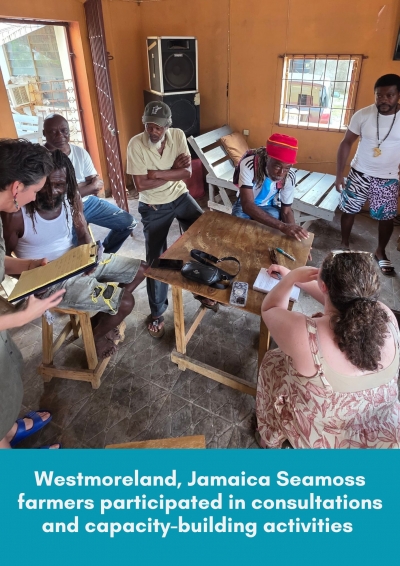
Westmoreland, Jamaica Seamoss farmers participated in consultations and capacity-building activities under the “Powering Change: Fueling a Gender-Responsive Energy Transition in Fisheries” initiative implemented through the STAR-Fish Project’s Gender Equality and Social Inclusion consultancy led by EnGen Collaborative.
Dr. Williams added: “One of the project’s key achievements during the reporting period was the completion of major activities on gender equality and social inclusion. This work strengthened understanding of gender and social issues associated with the clean energy transition, supported the development of national and regional guidance tools through Gender Action Plans (GAPs) for Belize, Grenada, Jamaica, and St. Vincent and the Grenadines, and advanced gender-responsive capacity building and stakeholder engagement across participating countries.”
Ms. Ćimić said that GAC welcomed STAR-Fish’s gender-responsive approach, vital to strengthening national capacities, promoting inclusion, and ensuring that the benefits of the clean energy transition are shared equitably.
“This aligns with Canada’s priorities of advancing gender equality, climate action, and sustainable, inclusive growth, while also supporting expanded trade opportunities in the region,” she said, pledging GAC’s continued support for the CRFM initiative.
Dr. Williams said that the project now enters Project Year 3 with “activities underway, strengthened governance arrangements, and a clearer pathway toward the practical application of renewable energy solutions across fisheries value chains in the Caribbean.”
“We look forward to continuing to work with all of you to support effective implementation and to contribute to a more resilient, sustainable, and inclusive Caribbean fisheries sector,” Ćimić affirmed.
###
Caribbean Fisheries Forum hosts its 24th Regular Session ahead of Ministerial Meeting

Belize City, Belize, 24 April 2026 (CRFM)—The Caribbean Fisheries Forum, comprised of 17 heads of fisheries authorities across the Caribbean Community (CARICOM), is convening its 24th Regular Meeting this week. The Forum, which provides technical guidance to the Caribbean Regional Fisheries Mechanism (CRFM), began its meeting on Thursday, 23 April 2026, with deliberations on the CRFM’s Seventh Biennial Work Plan (2026-2027), which sets the framework for the regional fisheries body to advance the development of fisheries and aquaculture across the region. Today’s agenda is focused on pressing regional and international developments, as well as the status and trends of the sector.

Across the Caribbean Community, approximately half-a-million people are employed in the fisheries and aquaculture sector, including 122,198 fishers, 4,926 aquaculture farmers, and 412,078 others who hold fisheries-dependent jobs across the value chain.
Dr. Marc Williams, Executive Director of the CRFM, said: “The Caribbean Fisheries Forum provides the CRFM with a platform to discuss fish stocks, the blue economy, marine ecosystems, and fishing activities. Given the proximity of the Member States in the Caribbean and the transboundary nature of the fish stocks, cooperation is essential for the sustainable management of these stocks.”
He added that, “The Forum meeting provides a platform for the Member States to share data, examine common challenges such as illegal, unreported, and unregulated (IUU) fishing, climate change, habitat degradation, and overfishing, and coordinate policies that protect resources while supporting livelihoods. Additionally, it reinforces partnerships among governments, fisherfolk organizations, researchers, and other nongovernmental organizations to foster trust, harmonize plans, improve enforcement, and attract funding for joint projects that benefit the CRFM Member States.”
On Thursday, 24 April 2026, the Forum also held elections for a new Chair and Vice Chair, as well as members of the Executive Committee of the Forum and the Resource Mobilization Sub-committee. After the elections, Mr. Ian Horsford, Chief Fisheries Officer, Antigua and Barbuda, assumed the Chair, succeeding Mr. Remone Johnson of the Turks and Caicos Islands for the next year.
"In these times of geopolitical uncertainty, CRFM—through its various organs such as the Forum—remains a shining example of what can be achieved through multilateralism as we chart the way forward for the sustainable development of Caribbean fisheries and blue economy," Mr. Horsford said.
The two-day meeting, which concludes today, Friday, 24 April, addresses the sustainable management of fisheries and aquaculture, as well as cross-cutting dimensions related to climate change, adaptation, and innovation, including the strategic adoption of renewable energy options within seafood value chains. The Forum’s deliberations also encompass initiatives to combat IUU fishing and fisheries crime, as well as gender mainstreaming in fisheries.
Furthermore, the Forum is providing technical guidance on two new protocols under the Caribbean Community Common Fisheries Policy (CCCFP): a protocol on marine spatial planning and the other on aquatic foods traceability, which involves tracking seafood across the value chain. Deliberations extend to the World Trade Organization (WTO) Fisheries Subsidies Agreement, the Agreement under the United Nations Convention on the Law of the Sea on the Conservation and Sustainable Use of Marine Biological Diversity of Areas beyond National Jurisdiction (the BBNJ Agreement), as well as the International Legally Binding Instrument on Plastic Pollution—all important legal instruments for the sector.
This week’s Forum meeting precedes the upcoming 20th Regular Meeting of the CRFM Ministerial Council, comprised of Ministers from the CRFM’s Member States.