 Anguilla
 Antigua and Barbuda
 Grenada
 Bahamas
 Barbados
 Belize
 Dominica
 Guyana
 Haiti
 Jamaica
 Montserrat
 St. Kitts and Nevis
 St. Lucia
 St. Vincent and the Grenadines
 Suriname
 Trinidad and Tobago
 Turks and Caicos


Seminar on Improving Traceability in the Agri-Food Sector to be held during CWA 2026

Traceability is a proven tool to enhance transparency, support compliance with international standards, and empower regulators, fishers, and farmers alike.
There is a need for a harmonized traceability framework across the Caribbean that will maintain 100% traceability throughout the food supply chain from harvest to consumer, both for domestic and international markets.
The Caribbean Regional Fisheries Mechanism (CRFM) is teaming up with its regional and international partners to host the upcoming traceability seminar, an in-person event to be convened during the 20th Caribbean Week of Agriculture.
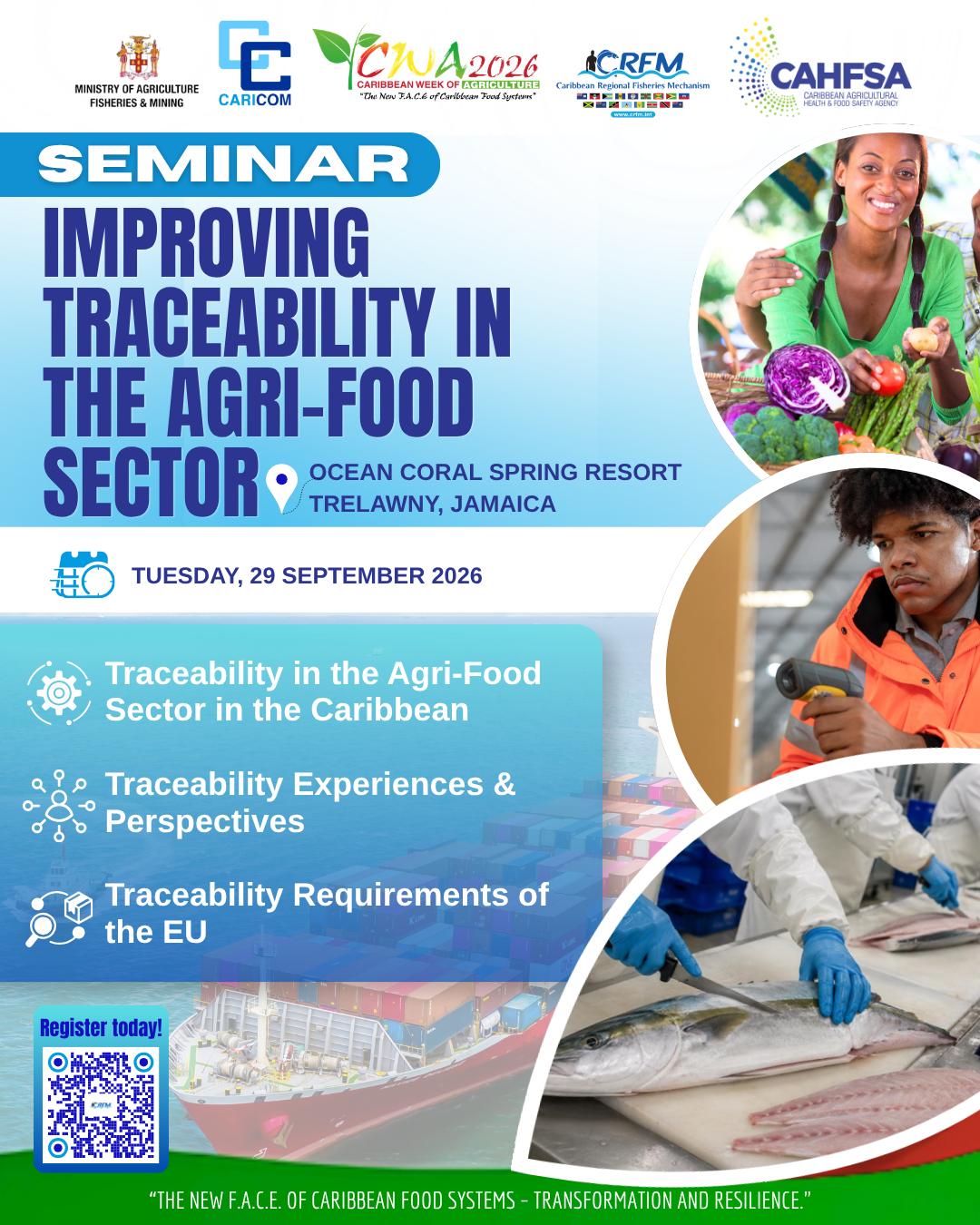
The objectives of the traceability seminar are to:
- Raise awareness about traceability in the agri-food system;
- Share knowledge about the requirements for traceability by importing countries; and
- Support traceability capacity-building for the fisheries, aquaculture, and agriculture sectors.
Please note that registration is required to attend the event, to be hosted at Ocean Coral Spring Resort in Trelawny, Jamaica.
Click here to register.
Photos courtesy: National Fisheries Authority, Jamaica.
CRFM Supports Regional Queen Conch Mission in the Turks and Caicos Islands

Providenciales, Turks and Caicos Islands, 31 July 2026 (CRFM)— The Caribbean Regional Fisheries Mechanism (CRFM), in collaboration with the Turks and Caicos Islands Department of Fisheries and Marine Resources Management (DFMRM), is supporting a regional technical mission this week to strengthen the sustainable management of the Caribbean's valuable queen conch fishery.
The mission brings together fisheries scientists and technical experts from the Turks and Caicos Islands, the Jamaica National Fisheries Authority (NFA) and the United Kingdom to advance stock assessment methods, review fisheries data, conduct field activities, and engage stakeholders in developing science-based management measures.
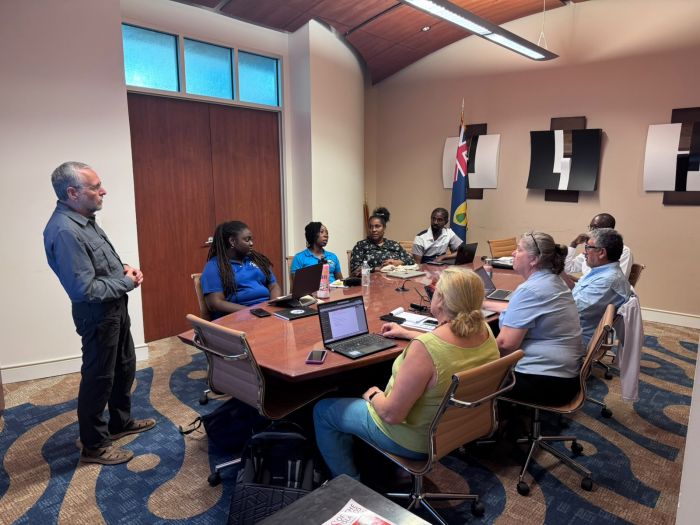
The initiative supports the Turks and Caicos Islands Government's commitment to sustainable fisheries and resilient coastal livelihoods by strengthening the scientific foundation for the long-term management of one of the country's most economically and culturally important marine resources. It also reinforces regional cooperation and knowledge exchange among Caribbean fisheries institutions.
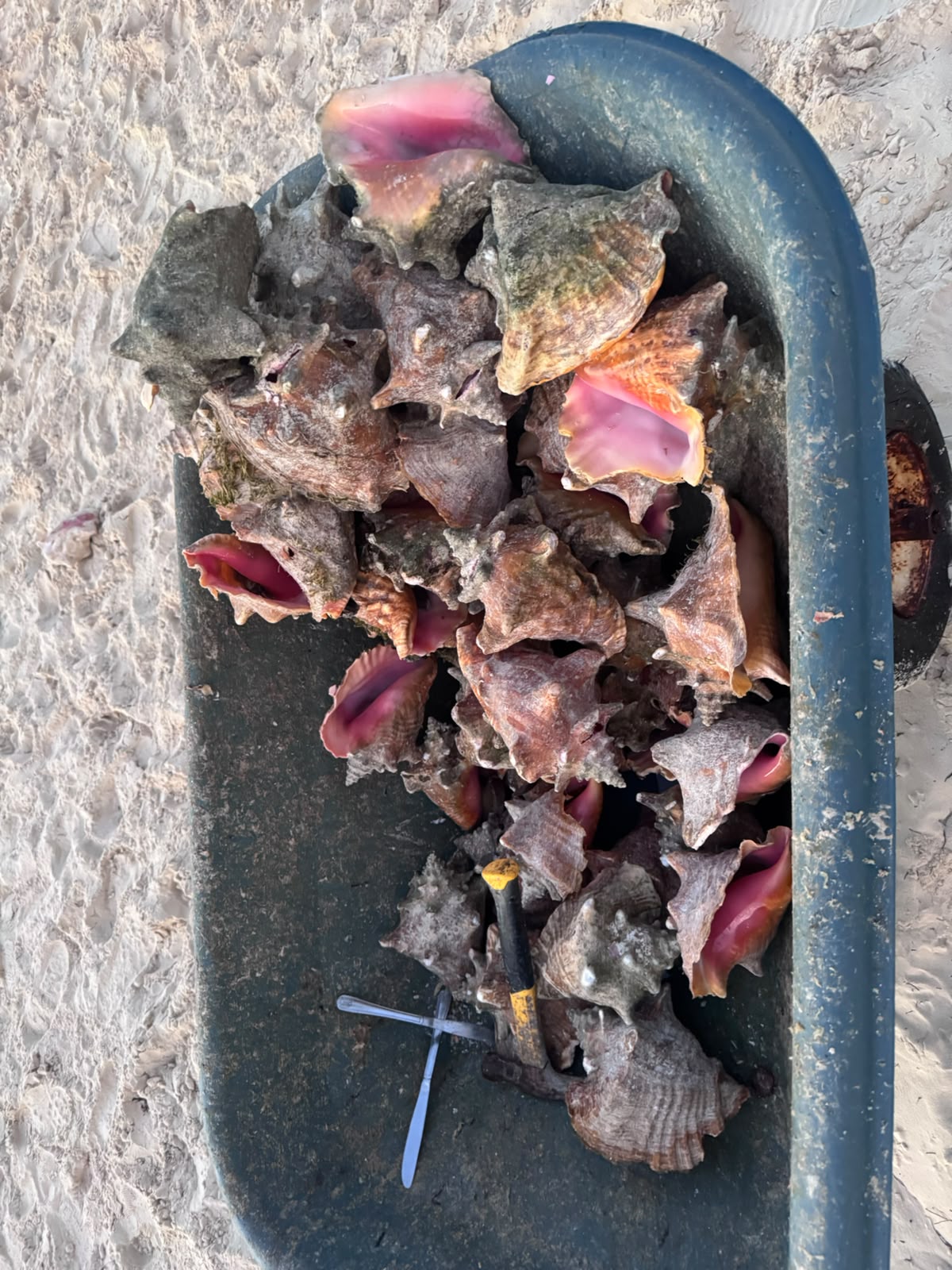
Kathy Lockhart, the Assistant Director of the DFMRM, expressed appreciation for the collaboration and highlighted the valuable contribution of Dr. Paul Medley who had completed the queen conch stock assessment and developed options for management including Harvest Control Rules. She is also looking forward to continued collaboration with the Jamaica NFA and the completion of a queen conch underwater survey in the Turks and Caicos Islands.
Through initiatives such as this, the CRFM continues to work with its Member States and partners to promote sustainable fisheries, healthy marine ecosystems and prosperous coastal communities across the Caribbean.
CRFM Working Group Takes Stock of Groundfish with Data-limited Assessment

Georgetown, Guyana, 12 August 2026 (CRFM)—Fisheries professionals from countries within the North Brazil Shelf Large Marine Ecosystem (NBSLME) are better equipped to assess groundfish species using length-based data for actionable management advice that will bolster the sustainability of the region’s fisheries. This 5-day training and capacity-building workshop on Data-limited Assessment of the Groundfish Stocks in the North Brazil Shelf Large Marine Ecosystem was convened from August 3-7, 2026, at the Grand Coastal Hotel in Georgetown, Guyana.
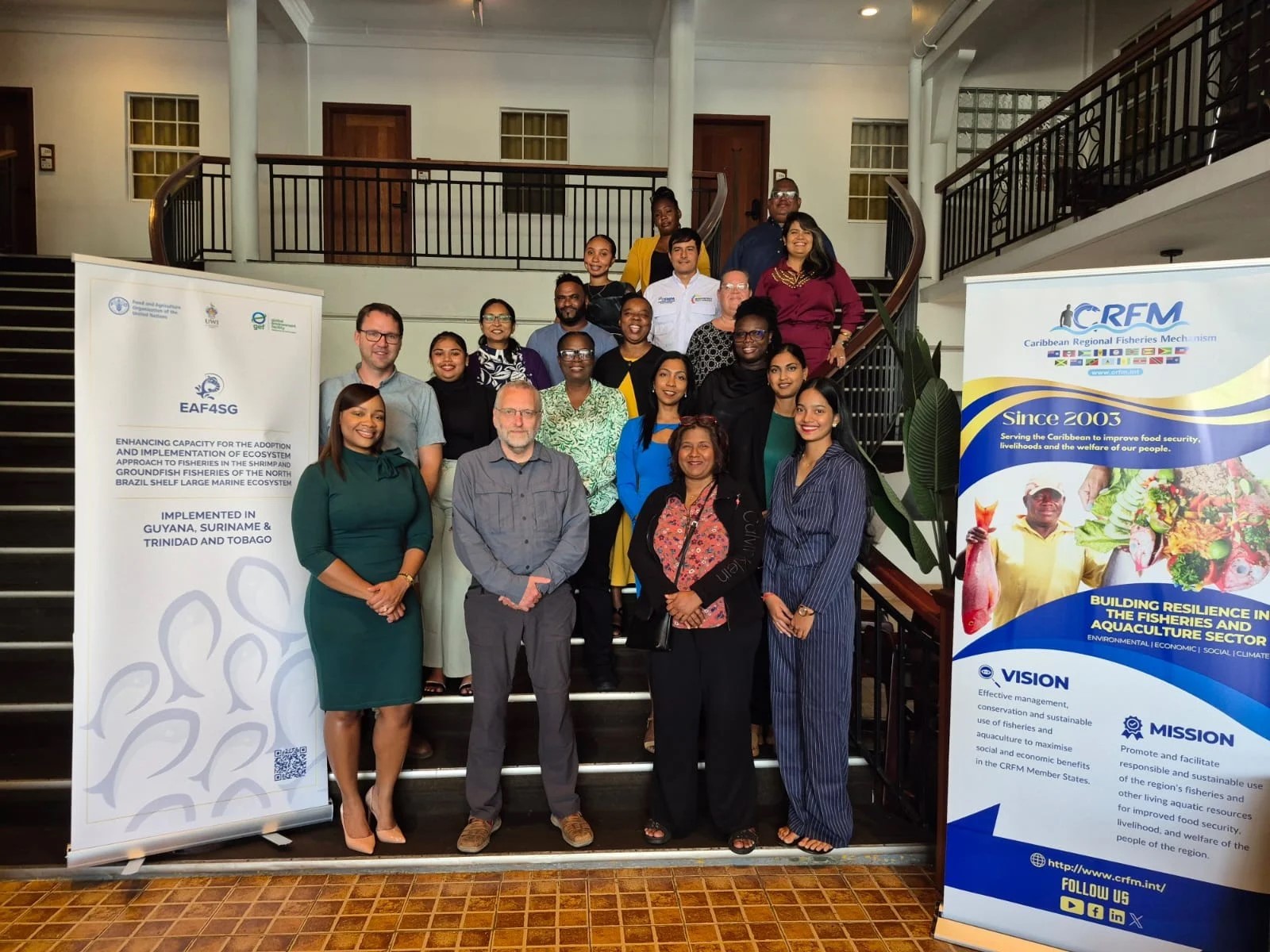
Participants after the opening of the CRFM-CSWG Data-limited Assessment of the Groundfish Stocks in the North Brazil Shelf Large Marine Ecosystem in Guyana
The hands-on event was convened by the Caribbean Regional Fisheries Mechanism (CRFM) through the CRFM Continental Shelf Fisheries Working Group (CRFM-CSWG), which collaborated with two institutional partners—the University of the West Indies-managed EAF4SG Project and the FAO-WECAFC Shrimp and Groundfish Working Group—working along with the national fisheries authorities of three CRFM Member States: Guyana, Suriname, and Trinidad and Tobago. The session also drew participation from Brazil and Venezuela.
CRFM Deputy Executive Director, Dr. Sandra Grant, said: “The CRFM hopes—through this series of stock assessment trainings held since 2023—to improve stock assessment capacity among data managers from the NBSLME. This will be evidenced by their enhanced knowledge and application of stock assessment methods and data-limited software tools in R.”
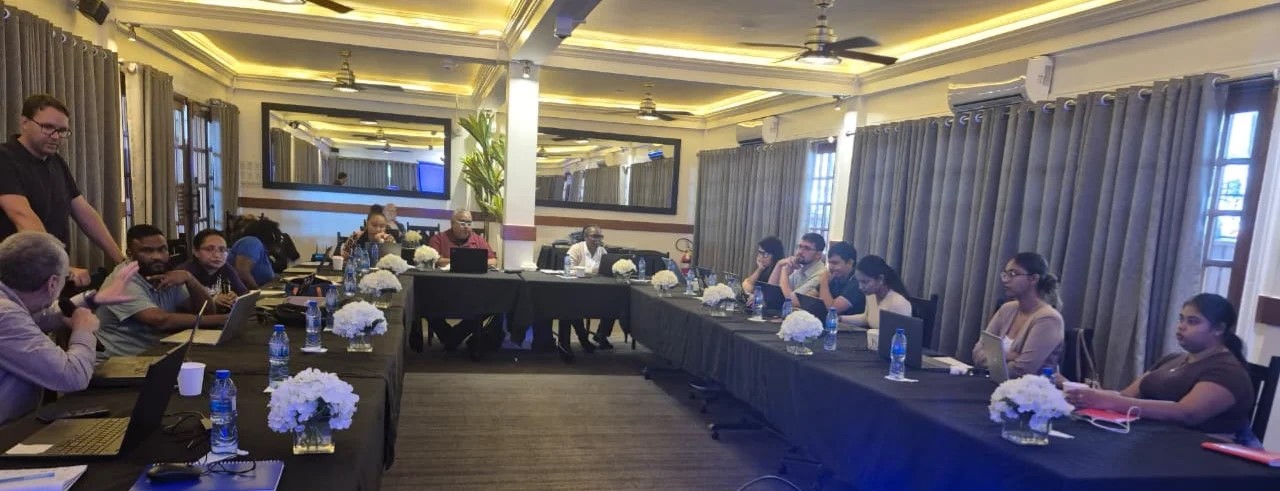
Workshop attendees discussed the groundfish data and analyses
Workshop participants were exposed to training in the collection and analysis of length data, and in developing technical management advice based on the analyses derived from them. The advice would address appropriate precautionary adjustments to harvest levels that are consistent with management objectives, as well as the subsequent monitoring of management controls. Training in management advice covered appropriate practical controls, such as technical gear changes, closed areas and seasons, as well as overall effort and catch limits.
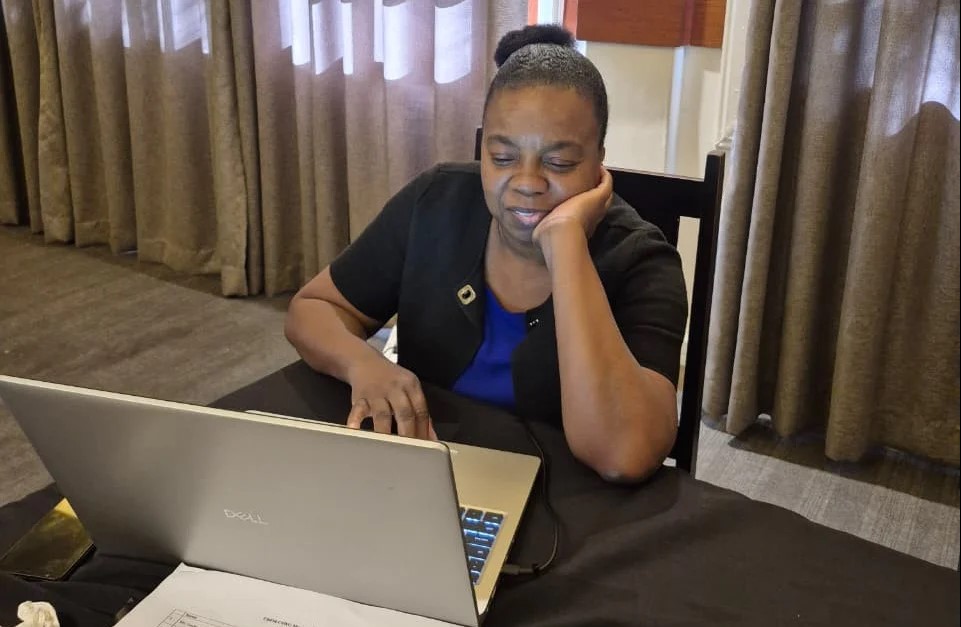
CRFM Statistics and Information Analyst, Mrs. June Masters, crunching numbers as she analyses length-data
"This workshop represents another important milestone in our ongoing collaboration with the Caribbean Regional Fisheries Mechanism (CRFM). In March 2025, we partnered to deliver similar training for participants from Guyana, Suriname, and Trinidad and Tobago. We are very pleased to again in 2026, cosponsor this very important and much needed workshop in partnership with the CRFM,” said Mrs. Nerissa Lucky, Technical & Project Coordinator, EAF4SG project (Enhancing capacity for the adoption and implementation of the Ecosystem Approach to Fisheries in the shrimp and groundfish fisheries of the North Brazil Shelf Large Marine Ecosystem).
Ms. Gitanjali Chandarpal, Assistant Representative, the United Nations Food and Agriculture Organization (FAO), added that, “Maintaining sustainable fisheries is crucial, and reliable stock assessments are the cornerstone of sustainable fisheries management. Even where data is limited, robust scientific methods allow us to reduce uncertainty, support evidence-based decision-making and apply precautionary approaches that safeguard both marine ecosystems and the livelihoods that depend upon them.”
Mrs. Selvine Stephenson-Grant, Deputy Programme Manager, Agricultural & Agro-Industrial Development, Caribbean Community (CARICOM) Secretariat, noted that, “Through the work of the Caribbean Regional Fisheries Mechanism, Member States continue to pursue greater cooperation in the sustainable use and management of shared fisheries resources. As the Community advances implementation of initiatives aimed at strengthening regional food systems, sustainable fisheries will continue to play an increasingly important role in ensuring healthy diets, supporting livelihoods, and building resilience across the Caribbean.”
She conveyed commendations from the CARICOM Secretariat to the CRFM Secretariat, the Government of Guyana, the FAO, the EAF4SG Project, and all participating Member States and partners for their continued leadership and commitment to sustainable fisheries management.
Ms. Desha Husbands, Fisheries Officer, who addressed participants on behalf of the Government of Guyana, said: “We cannot manage what we cannot measure, and we cannot manage what we don't know. This training workshop, facilitated by the CRFM and the EAF4SG project, addresses this need by strengthening our technical capacity through the ecosystem approach to fisheries. We can now move from a point of intuition to a point of evidence-based management.”
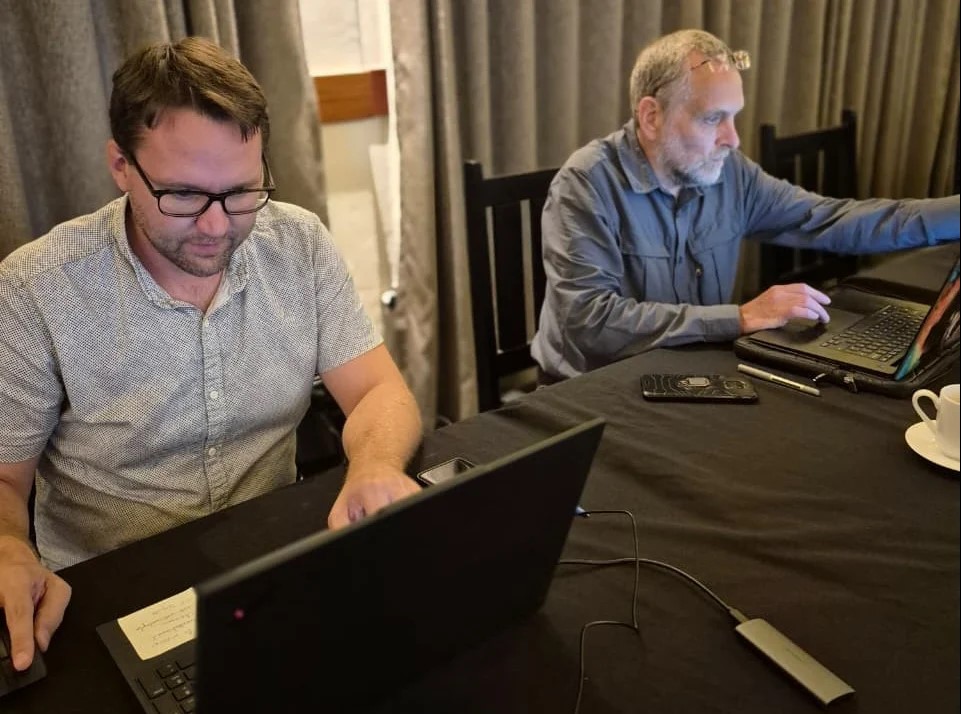
Dr. Tomas Willems (left) with Dr. Paul Medley at CSWG workshop
The expected outcomes of the training and capacity-building workshop on Data-limited Assessment of the Groundfish Stocks in the North Brazil Shelf Large Marine Ecosystem include:
- Improved stock assessment capacity among data managers;
- Stock assessment reports produced for completed assessments;
- Improved groundfish data collection methods, featuring updated protocols to support more accurate stock assessments;
- Enhanced understanding of the use of length-based assessment methods to support fisheries management decision-making;
- Increased capacity to apply precautionary approaches in recommending harvest adjustments and management measures using Management Strategy Evaluations; and
- Increased capacity to develop appropriate fisheries management controls, including gear modifications, closed seasons or areas, effort controls, and catch limits.
Dr. Tomas Willems, Head of Research & Statistics, Suriname Fisheries Department, said: “A key takeaway is that, although length-based methods do not require the long historical time series of data needed for many traditional stock assessment models, the data must still be of high quality and collected through rigorous, well-designed sampling programs. Furthermore, a sound understanding of the life history and biology of the species being assessed remains essential for obtaining reliable results.”
Dr. Paul Medley, the consultant who delivered the training, said: “It's been very productive. We made a lot of progress again. I hope that we can sustain this level of effort in trying to determine stock status. We are also developing appropriate methods for the Caribbean, so that we can monitor our stocks, our fisheries, and move towards more sustainable use.”
###
Request for Expressions of Interest - National Consultancy to update the Management Plan for the San San Pond Sak National Wetland Park, Panama

BE-CLME+ Project: Promoting National Blue Economy (BE) Priorities Through Marine Spatial Planning in the Caribbean Large Marine Ecosystem Plus (GEF Project ID 10211)
| DATE: | 31 July 2026 |
| TITLE: | National Consultancy to update the Management Plan for the San San Pond Sak National Wetland Park, Panama |
| CATEGORY: | Consultancy |
| PROJECT/ORGANIZATION: | CRFM |
| DEADLINE: | 30 August 2026 |
| REQUEST FOR EOI: | CLICK HERE (English Version) CLICK HERE (Spanish Version) |
| TERMS OF REFERENCE: | CLICK HERE (English Version) CLICK HERE(Spanish Version) |
| STATUS: | Open |
CRFM and Caribbean Community Climate Change Centre Join Forces to Build a Stronger, Climate-Ready Caribbean

Belize City, Belize, 17 July 2026 (CRFM)— The Caribbean Regional Fisheries Mechanism (CRFM) and the Caribbean Community Climate Change Centre (CCCCC or 5Cs) have taken an important step toward working more closely together to help protect the Caribbean's oceans, fisheries, and coastal communities from the growing impacts of climate change.
Leaders from both organizations met on July 16, 2026, to discuss how to combine their knowledge, resources, and experience to tackle some of the region's most pressing environmental challenges.
During the meeting, the CRFM shared updates on several major projects that are helping Caribbean countries build stronger, more sustainable fisheries. These initiatives improve marine planning, support renewable energy, strengthen local fishing communities, and promote gender equality in the fisheries sector.

(Left to right) Mr. Mansfield Blackwood – 5Cs Assistant Executive Director; Dr. Marc Williams - CRFM Executive Director; Ms. Sanya Compton – CRFM Programme Manager, Climate Change and Blue Economy Development, Policy, Planning and Management; Mr. Peter A. Murray - Regional Project Coordinator for the GEF/CAF/FAO/CRFM BE-CLME+ Project; and Mr. Keith Nichols – 5Cs Head, Special Projects
One of the biggest topics of discussion was sargassum, the large amounts of brown seaweed that continue to wash up on Caribbean beaches. While sargassum can harm tourism, fishing, and marine ecosystems, both organizations agreed that it could also become an opportunity if safely transformed into useful products through a circular economy approach. They also emphasized the need for more research, better coordination, and shared information to solve the problem effectively.
The meeting also highlighted the growing importance of Blue Carbon; the carbon stored in coastal ecosystems such as mangroves and seagrasses, which plays a key role in combating climate change. It was noted that there has been a conversation in the region about the need to develop a Blue Carbon Policy to help Caribbean countries protect these valuable natural resources.
Another major priority discussed was improving access to climate and marine data. Both organizations recognized that better information is essential for making smarter decisions, creating stronger policies, and helping Caribbean countries prepare for future climate challenges. They agreed that sharing data more openly will benefit governments, researchers, fishers, and coastal communities across the region.
Both the CRFM and 5cs emphasized that stronger partnerships are essential for protecting the Caribbean's marine resources and ensuring that future generations can continue to benefit from healthy oceans.
The partnership reflects a shared vision: a Caribbean where healthy oceans, thriving fisheries, resilient coastal communities, and climate-smart development go hand in hand.
The Caribbean's Blue Economy Knowledge now has a new home

BE-CLME+ Knowledge Management Platform aims to connect policymakers, fisherfolk, private sector, and communities
Belize City, Belize (CRFM) – The Caribbean Regional Fisheries Mechanism (CRFM), in partnership with the Food and Agriculture Organization of the United Nations (FAO), and the Development Bank of Latin America and the Caribbean (CAF), have officially launched an open-access, Caribbean Blue Economy (BE) Knowledge Hub that brings together decades of the region’s expertise and insight on fisheries, aquaculture, and marine spatial planning.

The knowledge hub is a permanent, multilingual home for Blue Economy data, best practices, policy tools, and technical insight from across the participating countries–Barbados, Belize, Guyana, Jamaica, Panama, and Saint Lucia—built on CRFM’s expertise and the knowledge generated through the BE-CLME+ Project.
The digital platform is a crucial outcome of the Global Environment Facility (GEF)-funded, BE-CLME+: Promoting National Blue Economy Priorities Through Marine Spatial Planning in the Caribbean Large Marine Ecosystem Plus project.
Dr. Marc Williams, Executive Director, CRFM, stated, “The BE-CLME+ Knowledge Management Hub represents the continued drive of the CRFM to make knowledge products more accessible to all stakeholders; connecting policymakers, practitioners, researchers, and communities to the evidence they need to act, adapt, and lead.”
Dr. Williams further elaborated: “Small-scale fishers, women who process and trade the catch, youth deciding whether this industry has a future worth joining, and Indigenous communities whose stewardship of marine ecosystems spans generations — all will find, in this platform, a resource calibrated to their realities. That means accessible formats, multilingual content, and practical tools that translate regional expertise into actionable guidance for every practitioner in the value chain, including fisherfolk, academics, and policymakers alike.”
Powered by insights produced through the BE-CLME+ Project and CRFM, the Hub organises technical reports, policy briefs, fact sheets, and multimedia resources across seven thematic areas for easy discovery. Users can search, filter by theme, and access an AI-powered assistant — “Ask BE-CLME” — available in both English and Spanish to help navigate the platform's resources.
Across the six participating countries, governments now have a consolidated evidence base—which can be found at www.beknowledge.crfm.int—to drive marine spatial planning, sharpen national fisheries policy, and attract blue economy investment.

Dr. Renata Clarke, FAO Sub-Regional Coordinator for the Caribbean, said, “The importance of this platform cannot be overstated. It would help to unlock grey literature to better support decision-making by practitioners that is centered on benefits to communities. At present, piles of information and knowledge produced over decades sit unused, on desks and in drawers of national officers.”
With “over USD 200 million in annual Caribbean exports and more than half-a-million jobs” at stake across coastal communities from Belize to Barbados, according to the CRFM Statistics and Information Report – 2021/2022, the sustainable management of marine resources is an economic and food security imperative.
 Erick Castro, Principal Executive, CAF, said, “
Advancing a sustainable blue economy requires long-term investment in knowledge, governance, and human capital. Through BE-CLME+, we are helping to build the foundations that enable countries to make informed decisions, strengthen institutions, and unlock opportunities for inclusive and resilient growth. This platform is a tangible example of that commitment, transforming regional knowledge into a shared asset that will continue to generate blue value over time.
”
Sustainability Is Not a Cost — It Is the Business Case
The Caribbean sits at the centre of one of the most biodiverse marine regions on earth, yet a significant share of its seafood continues to be exported as raw, unprocessed product which leaves most of the value, and most of the jobs, somewhere else. Closing that gap is a trade strategy, not a conservation ambition.
The BE-CLME+ Knowledge Management Platform provides the market frameworks, training, and certification pathways for seafood standards, and value chain intelligence that make sustainable seafood profitable, scalable, and investable; while equipping businesses with the regional data they need to make decisions with confidence.
Since 2023, the BE-CLME+ project has aimed to maintain and preserve cultural heritage through sustainable fisheries management, improved livelihoods, and alternative livelihoods while strengthening the integration of fisheries and ecosystem management to restore, protect, and maintain marine biodiversity, productivity, and resilience of marine ecosystems.
###
Statement by Honourable Kyle Hodge, Minister of Economic Development, Industry, Commerce, Lands, Planning, Natural Resources and Water, Anguilla


Peter A. Murray is the new Regional Project Coordinator for the BE-CLME+ Project


The CRFM Secretariat is pleased to announce that Mr. Peter A. Murray is the new Regional Project Coordinator of the USD 48 million GEF/CAF/FAO/CRFM Project entitled, “Promoting National Blue Economy Priorities Through Marine Spatial Planning in the Caribbean Large Marine Ecosystem Plus Region" (BE-CLME + Project).
Mr. Murray formerly served as the CRFM's Advisor, Fisheries Management and Development, and he has played an active technical role for several decades on BE-related matters across the Caribbean, in addition to monitoring control and surveillance, illegal unreported and unregulated fishing and the broader spectrum of trans-national crime, gender, and fisheries nutrition, health and sanitary issues.
He comes highly qualified with 45 years of experience in fisheries as well as a Master of Philosophy degree in Biology and a Diploma in International Environmental Law. He has been senior-most Fisheries Biologist at Saint Lucia’s Department of Fisheries; senior Programme Officer at the OECS Secretariat, and Programme Manager at the Caribbean Regional Fisheries Mechanism Secretariat.
Mr. Murray, who succeeds Dr. Dayne Buddo, now has lead responsibility for overseeing BE-CLME+ project activities. As such, he will work towards ensuring alignment with strategic goals, timely delivery of planned activities and fostering collaboration among stakeholders and partners. His extensive experience and knowledge will be very helpful in advancing the objectives of the project, which is focused on marine spatial planning, marine managed areas, seafood value chain development, and ultimately the sustainable use and management of marine living resources, biodiversity conservation, stakeholder engagement and capacity-building throughout the region, and enhancing resilience to climate change and ocean acidification.
The CRFM welcomes Mr. Murray to his new role and wishes him all the best in this new chapter of his professional journey.
Statement on the Passing of Dr. Shelly-Ann Cox, Chief Fisheries Officer of Barbados

 It is with profound sadness and a heavy heart that we learned of the sudden passing of Dr. Shelly-Ann Cox, Chief Fisheries Officer of Barbados. On behalf of the Caribbean Regional Fisheries Mechanism (CRFM) Secretariat, we extend our deepest and sincerest condolences to her family, friends, colleagues, and the entire fishing community of Barbados during this difficult time.
Throughout her distinguished career, Shelly-Ann served Barbados and the wider Caribbean with unwavering dedication, professionalism, and passion. As Chief Fisheries Officer, she played a pivotal role in advancing sustainable fisheries management, strengthening the resilience of fishing communities, promoting responsible stewardship of marine resources, and contributing to regional cooperation on issues of critical importance to the fisheries and aquaculture sectors. Her expertise, leadership, and commitment earned her the respect and admiration of her colleagues across the Caribbean region and beyond.
Dr. Cox’s contributions extended well beyond the shores of Barbados. Through her active engagement in regional initiatives and collaboration with the CRFM and other partner organizations, she helped to shape policies and programs that have strengthened fisheries governance, enhanced food and nutrition security, and supported the livelihoods of thousands of fisherfolk and fish workers across the Caribbean. Shelly-Ann’s voice was valued in regional discussions, and her dedication to the sustainable development of the fisheries sector leaves a lasting legacy that will continue to benefit future generations.
At this time of immense loss, our thoughts and prayers are with her loved ones, her colleagues at the Fisheries Division, and especially the fisherfolk and fishing communities of Barbados, who have lost a steadfast advocate and champion. May they find comfort in the remarkable impact she had during her lifetime and in the many lives Shelly-Ann touched through her service. We join the people of Barbados in mourning her passing and in celebrating a life devoted to advancing fisheries and the wellbeing of Caribbean people.
May her soul rest in eternal peace.
Dr. Marc Williams
Executive Director
CRFM Secretariat
14 June 2026
World Oceans Day Remarks from CRFM Executive Director, Dr. Marc Williams


Today, as we observe World Oceans Day, we are reminded that the Caribbean Sea and our surrounding oceans are not only a source of natural beauty but also the foundation of livelihoods, culture, food security, and economic opportunity for millions of people across our region. The theme of ocean stewardship has never been more important. For the Caribbean, the future of our oceans is inseparable from the future of our people. Healthy marine ecosystems support fisheries, tourism, transportation, coastal protection, and countless other services that sustain our economies and communities. As we celebrate this day, we must reaffirm our collective commitment to safeguarding our marine resources for present and future generations.
Small-scale fisheries remain the backbone of the fisheries sector in most Caribbean countries. Thousands of fishers, fish vendors, processors, and their families depend directly on the sea for their livelihoods and well-being. These fisheries contribute significantly to local food supplies, employment, poverty reduction, and cultural heritage. As global food systems face mounting pressures from climate change, economic uncertainty, and supply chain disruptions, investing in sustainable small-scale fisheries is essential to strengthening regional food and nutrition security. We must continue to empower fishing communities through improved management, access to finance, modern technology, capacity building, and policies that recognize their invaluable contributions to national and regional development.
At the same time, the Caribbean has tremendous opportunities to expand sustainable mariculture and aquaculture as part of a diversified Blue Economy. Responsible mariculture can increase domestic seafood production, reduce reliance on imports, create jobs, attract investment, and build resilience to climate-related shocks. Through innovation, science-based planning, and effective marine spatial management, we can unlock new opportunities in marine fish farming, seaweed cultivation, shellfish production, and other ocean-based industries while safeguarding marine biodiversity. The CRFM remains committed to supporting Member States in advancing sustainable Blue Economy initiatives that balance economic growth, environmental stewardship, and social inclusion.
However, the promise of our oceans cannot be realized if marine pollution continues to endanger our ecosystems. Plastic waste, abandoned fishing gear, land-based runoff, wastewater discharge, and other pollutants are degrading coastal habitats, damaging coral reefs, threatening marine life, and undermining fisheries productivity. Addressing marine pollution requires action by governments, businesses, communities, and individuals alike. On this World Ocean Day 2026, let us renew our commitment to reducing pollution at its source, strengthening waste management systems, promoting sustainable consumption, and protecting the marine environment on which our prosperity depends. Together, we can build a cleaner, healthier, and more resilient Caribbean Sea that continues to nourish our people, support our economies, and inspire future generations.