Anguilla
  Antigua and Barbuda
  Grenada
  Bahamas
  Barbados
  Belize
  Dominica
  Guyana
  Haiti
Haiti  Jamaica
  Montserrat
  St. Kitts and Nevis
  St. Lucia
  St. Vincent and the Grenadines
  Suriname
  Trinidad and Tobago
  Turks and Caicos

Use of a Maritime Domain Awareness Tool for Detecting Fishing Activity in the Waters of Caribbean States
Peter A. Murraya*, Terry Ettienneb, Rolerick Sobersc, Neville Wintb, and Chadine Allenb
Caribbean Regional Fisheries Mechanism (CRFM) Secretariat, Belize City, Belize. Email: This email address is being protected from spambots. You need JavaScript enabled to view it.
a
CARICOM Implemention Agency for Crime and Security (CARICOM IMPACS)b and Regional Security System (RSS)c
ABSTRACT
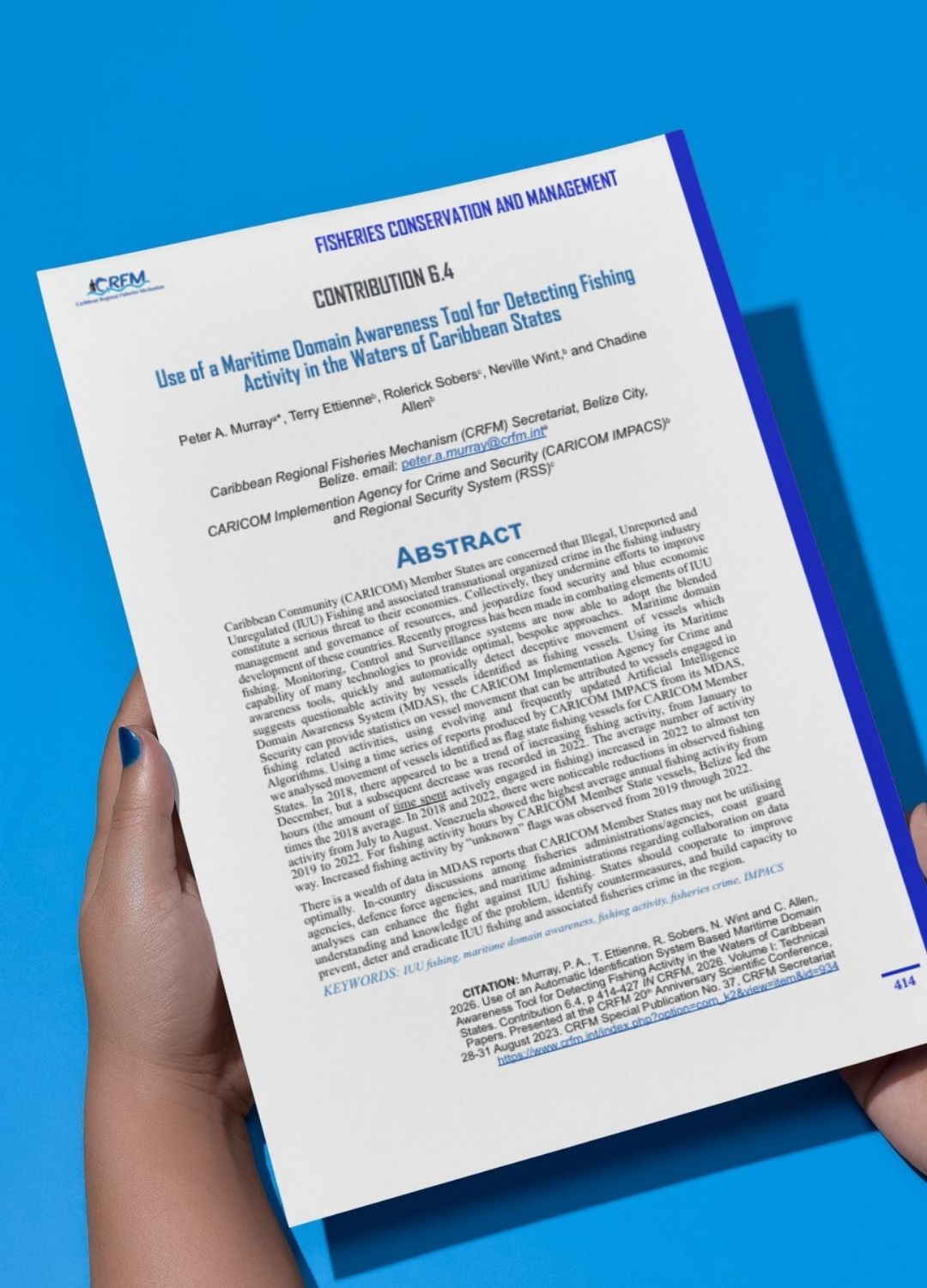 Caribbean Community (CARICOM) Member States are concerned that Illegal, Unreported and Unregulated (IUU) Fishing and associated transnational organized crime in the fishing industry constitute a serious threat to their economies. Collectively, they undermine efforts to improve management and governance of resources, and jeopardize food security and blue economic development of these countries. Recently progress has been made in combating elements of IUU fishing. Monitoring, Control and Surveillance systems are now able to adopt the blended capability of many technologies to provide optimal, bespoke approaches. Maritime domain awareness tools, quickly and automatically detect deceptive movement of vessels which suggests questionable activity by vessels identified as fishing vessels. Using its Maritime Domain Awareness System (MDAS), the CARICOM Implementation Agency for Crime and Security can provide statistics on vessel movement that can be attributed to vessels engaged in fishing related activities, using evolving and frequently updated Artificial Intelligence Algorithms. Using a time series of reports produced by CARICOM IMPACS from its MDAS, we analysed movement of vessels identified as flag state fishing vessels for CARICOM Member States. In 2018, there appeared to be a trend of increasing fishing activity, from January to December, but a subsequent decrease was recorded in 2022. The average number of activity hours (the amount of time spent actively engaged in fishing) increased in 2022 to almost ten times the 2018 average. In 2018 and 2022, there were noticeable reductions in observed fishing activity from July to August. Venezuela showed the highest average annual fishing activity from 2019 to 2022. For fishing activity hours by CARICOM Member State vessels, Belize led the way. Increased fishing activity by “unknown” flags was observed from 2019 through 2022. There is a wealth of data in MDAS reports that CARICOM Member States may not be utilising optimally. In-country discussions among fisheries administrations/agencies, coast guard agencies, defence force agencies, and maritime administrations regarding collaboration on data analyses can enhance the fight against IUU fishing. States should cooperate to improve understanding and knowledge of the problem, identify countermeasures, and build capacity to prevent, deter and eradicate IUU fishing and associated fisheries crime in the region.

HOW TO CITE: Murray, P. A., T. Ettienne, R. Sobers, N. Wint and C. Allen, 2026. Use of an Automatic Identification System Based Maritime Domain Awareness Tool for Detecting Fishing Activity in the Waters of Caribbean States. Contribution 6.4, p 414-427 IN CRFM, 2026. Volume I: Technical Papers. Presented at the CRFM 20th Anniversary Scientific Conference, 28-31 August 2023. CRFM Special Publication No. 37, CRFM Secretariat https://www.crfm.int/index.php?option=com_k2&view=item&id=934
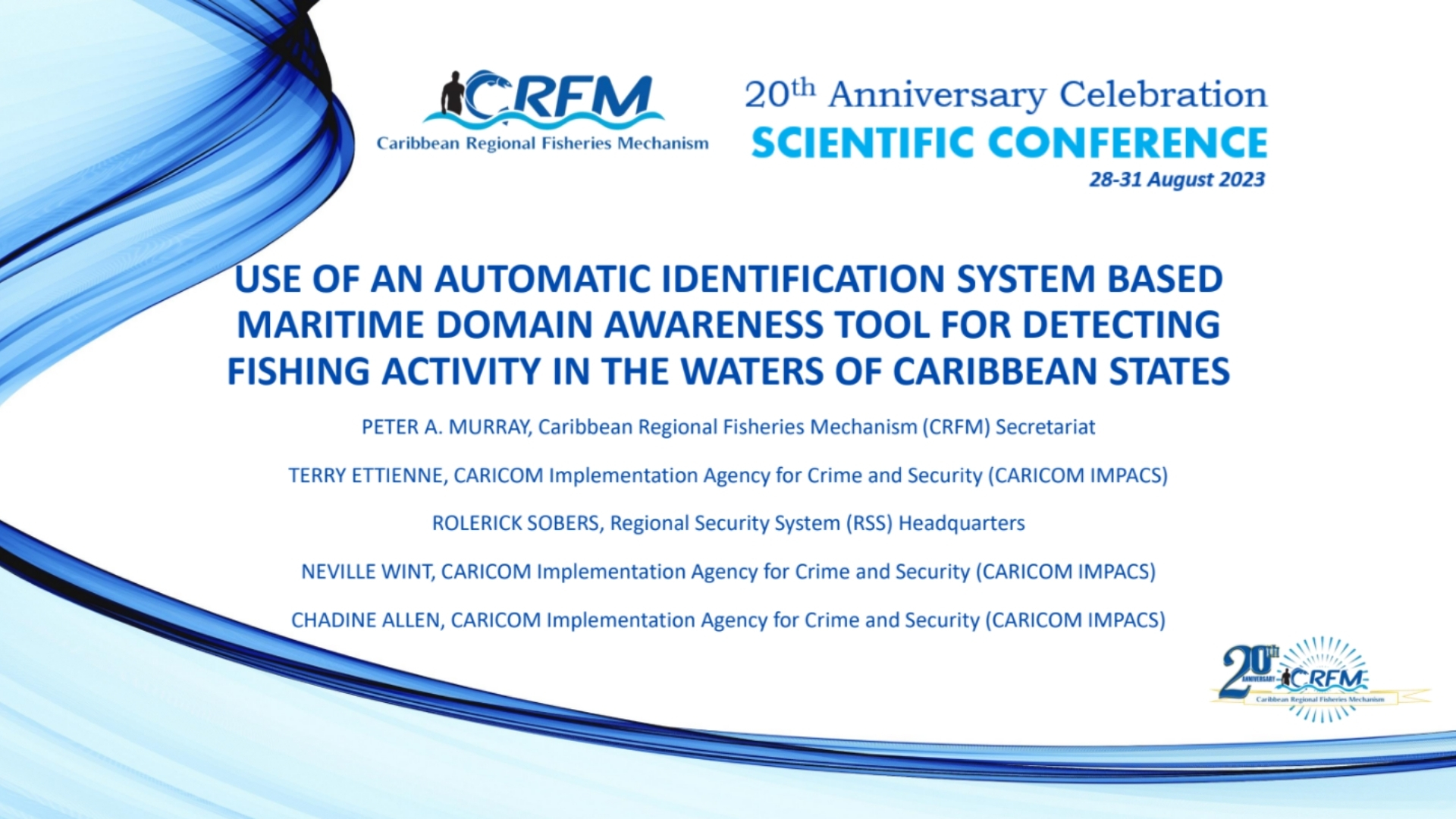
POWERPOINT
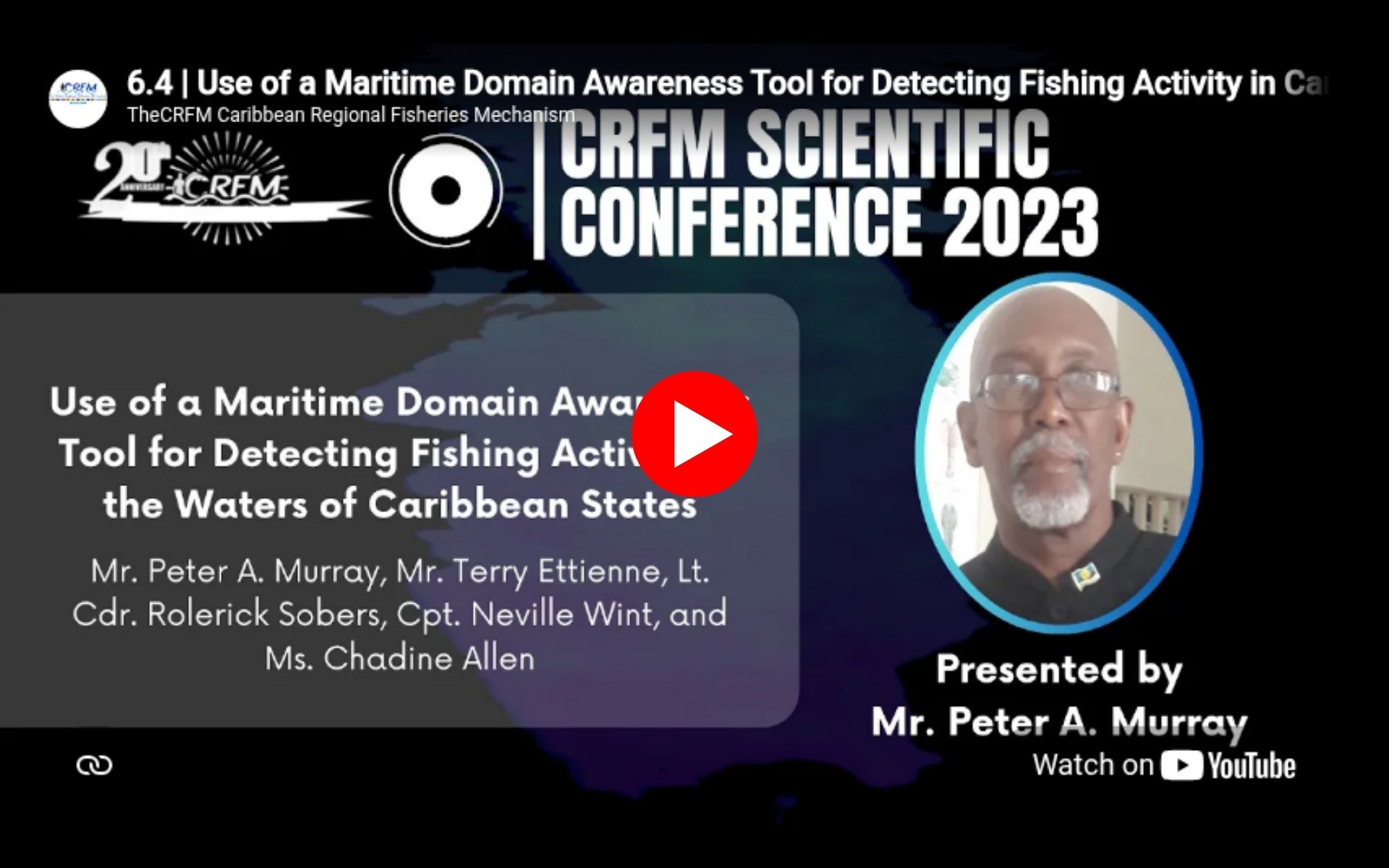
VIDEO PRESENTATION
FULL SCIENTIFIC PUBLICATION
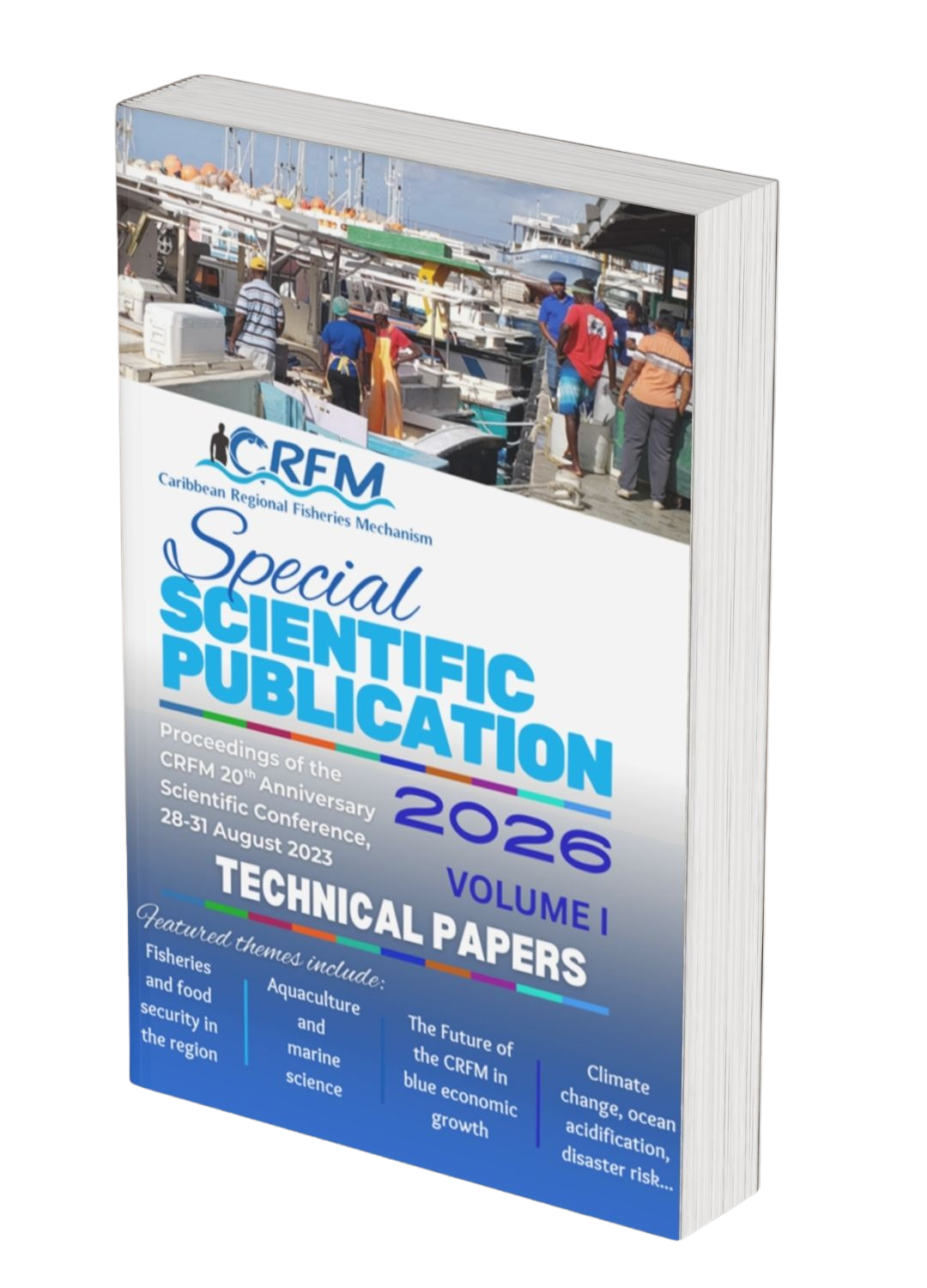
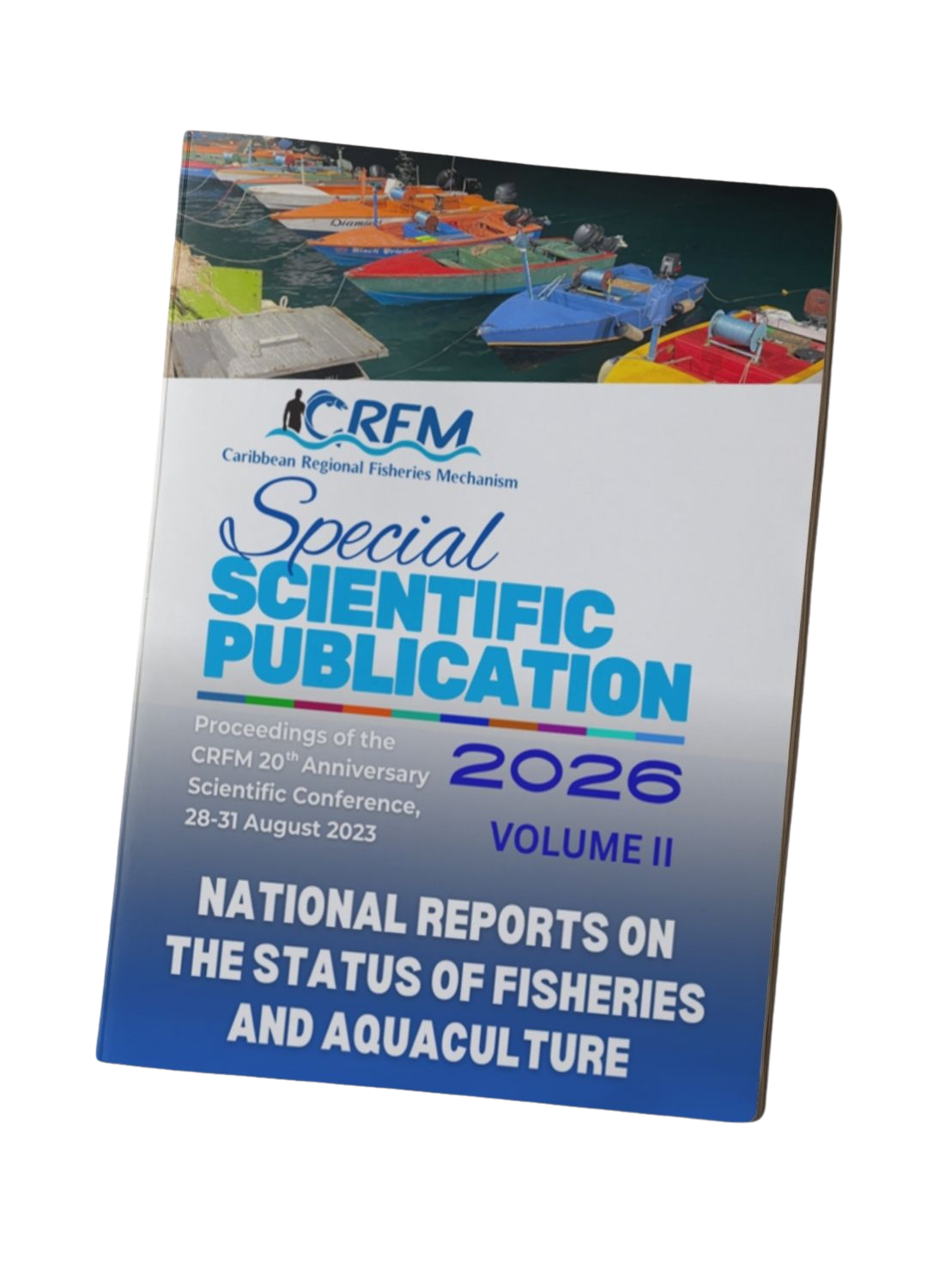
Download CRFM Special Publication No. 37:
Proceedings of the CRFM 20th Anniversary Scientific Conference
KEY LINKS
Scientific Conference Home Page
Scientific Conference Proceedings Page
Explore all 20th Anniversary Scientific Papers
NOTE
If you have challenges accessing or downloading documents in this series, please email us at This email address is being protected from spambots. You need JavaScript enabled to view it. , copied to This email address is being protected from spambots. You need JavaScript enabled to view it. , or call us at +501-223-4443. Some browsers do not properly load Google Drive documents, so if you have challenges accessing the PowerPoint slides or the full special publication, try switching to another browser such as Google Chrome or Microsoft Edge.