 Anguilla
  Antigua and Barbuda
  Grenada
  Bahamas
  Barbados
  Belize
  Dominica
  Guyana
  Haiti
Haiti  Jamaica
  Montserrat
  St. Kitts and Nevis
  St. Lucia
  St. Vincent and the Grenadines
  Suriname
  Trinidad and Tobago
  Turks and Caicos

Promoting Fisher-led Implementation of the SSF Guidelines in Saint Vincent and Grenadines
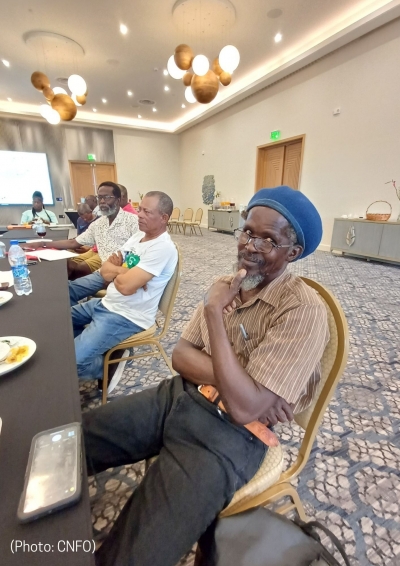
Saint Vincent and Grenadines, 12 May 2025 (CNFO)—The National Fisherfolk Organisation in Saint Vincent and the Grenadines (SVG), with the Caribbean Network of Fisherfolk Organisations (CNFO), is implementing a workshop: “Promoting fisher-led implementation of SSF Guidelines in the Caribbean Region." Partners are Sandals Resorts International (SVG) and CSFUND. The workshop is being held from May 12-13, 2025 at the Sandals Resort's conference room in Saint Vincent and the Grenadines.
The CNFO has participated in the development of both the Caribbean Community Common Fisheries Policy (CCCFP) and the global policy, the Voluntary Guidelines on Securing Sustainable Small-Scale Fisheries in the context of food security and poverty eradication (or the SSF Guidelines).
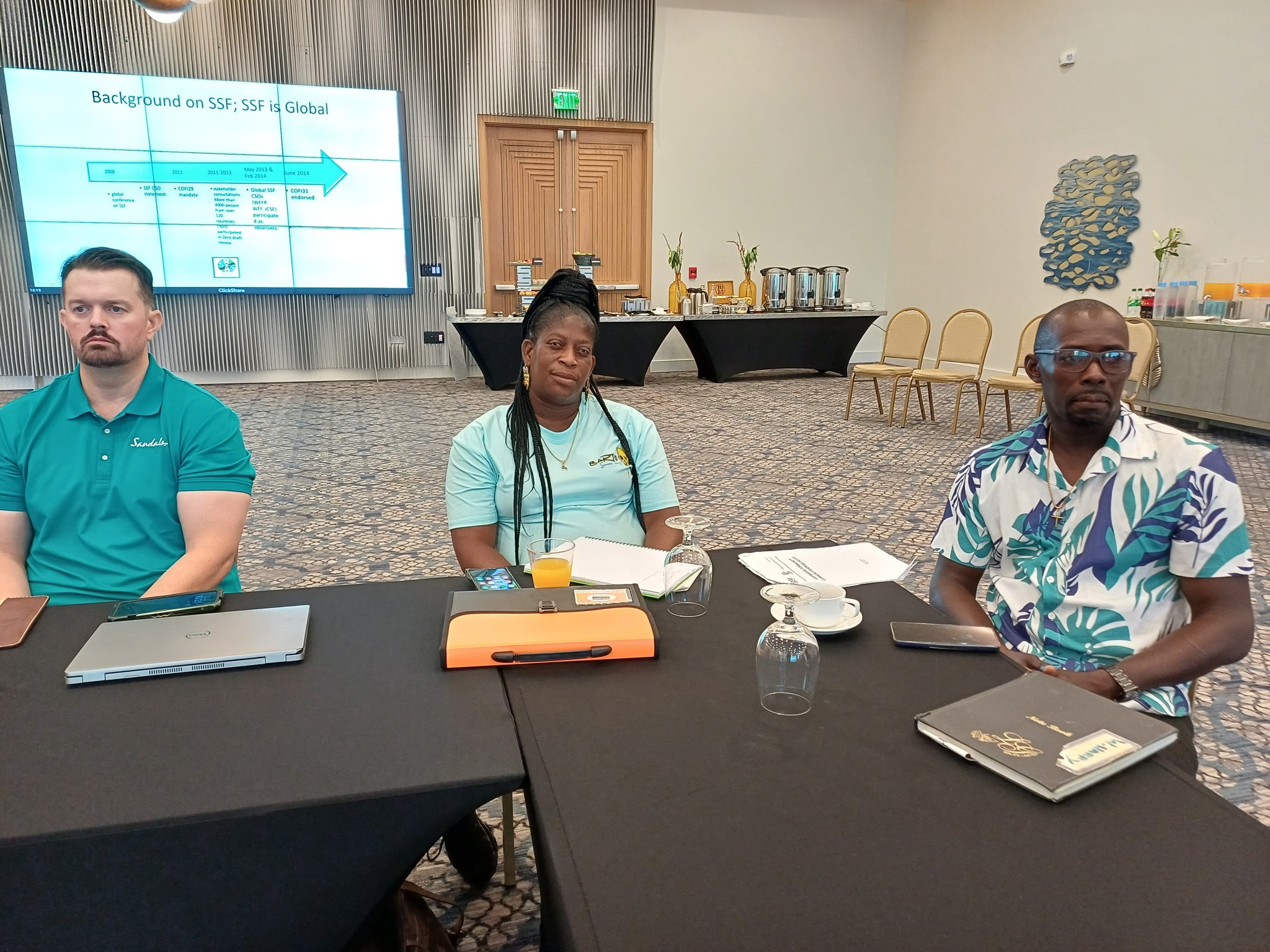
The network was instrumental in having the SSF Guidelines enshrined into the first protocol of the Caribbean Community Common Fisheries Policy. Although the SSF guidelines is imbedded within the fisheries policy of the Caribbean Community, there is limited focus on active implementation while SSF fishers are increasingly being challenged by NGO agendas, climate change, ecosystem degradation, marine protected areas (MPAs) and marine spatial planning (MSP), and so called “Blue Economy” initiatives.
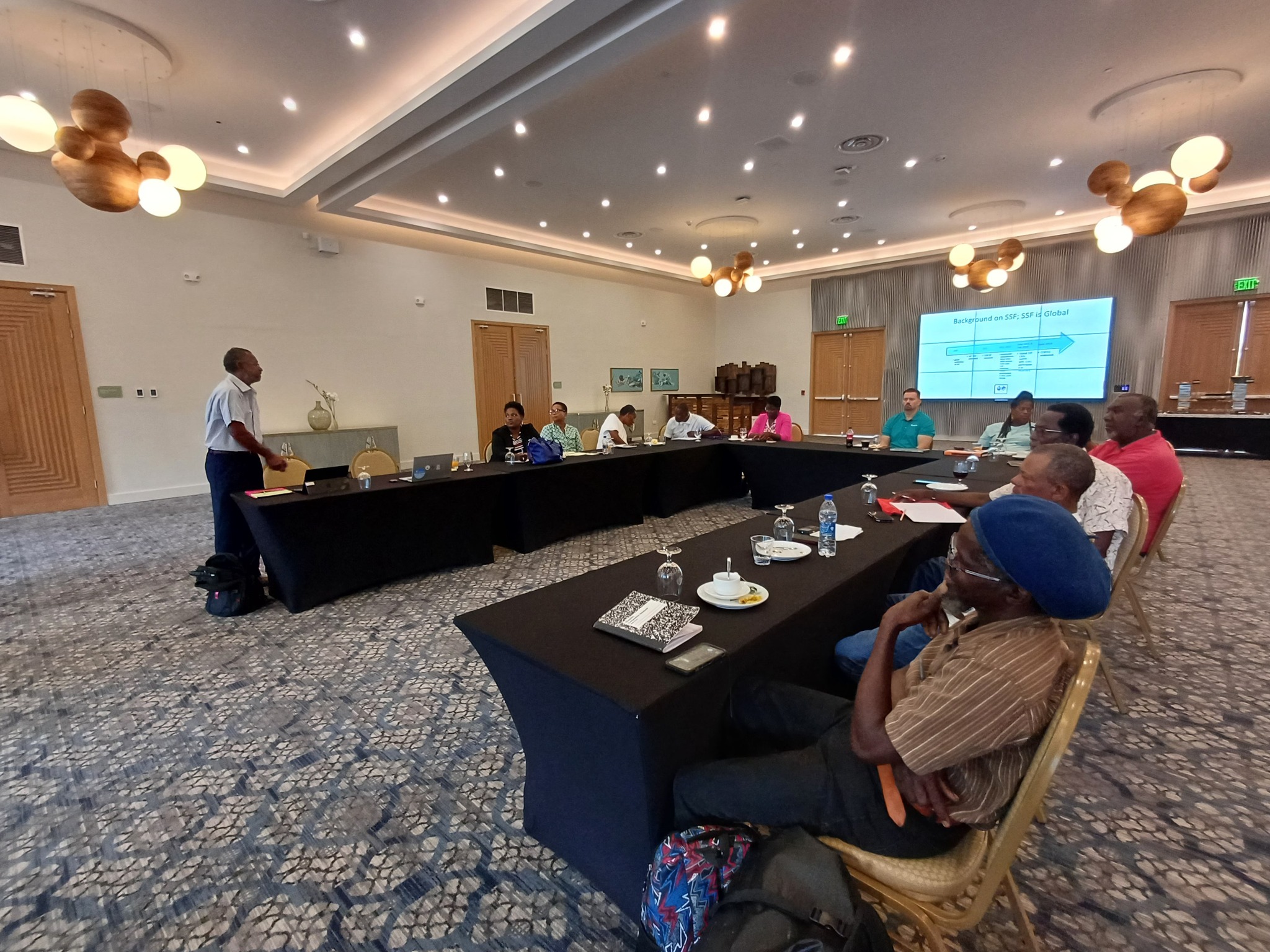
The objectives of this meeting are:
- Build awareness and understanding of regional and global fisheries policy, namely the Caribbean Community Common Fisheries Policy, and the Voluntary Guidelines on Securing Sustainable Small-Scale Fisheries in the context of food security and poverty eradication;
- Develop draft advocacy plans for fishers to address major concerns;
- Develop draft plans for fisher-led implementation of the SSF Guidelines;
- Build awareness of the CNFO’s Regional Code of Conduct;
- Fisheries value chain discussions; and
- Marketing of fish in Saint Vincent and the Grenadines.
The National Fisherfolk Organisation in Saint Vincent and the Grenadines joins the regional network in spearheading the active implementation of these policy documents, as one of the means to improve fishers’ lives in the region. The SSF Guidelines place the people (small-scale fishers) at the centre of development in a clearly synergistic manner with the Sustainable Development Goals.
- End -
PRESS CONTACT:
NAME: Winsbert Harry
PHONE: +1 (784) 495-2008
E-mail: This email address is being protected from spambots. You need JavaScript enabled to view it.
About CNFO: The Caribbean Network of Fisherfolk Organisations (CNFO) is a regional network of small-scale fisherfolk and their organisations operating across the Caribbean Community (CARICOM). The network is committed to the realization of profitable and sustainable fisheries that support fisherfolk's livelihoods, promote effective ecosystem-based management of fisheries resources, contribute to food security for Caribbean communities, and increase resilience to risks, including climate change. For more information on CNFO, see: https://cnfo.fish/.
Disclaimer: This press release was shared by the Caribbean Network of Fisherfolk Organisations, and the views expressed herein are those of the CNFO and not necessarily those of the Caribbean Regional Fisheries Mechanism.
Updated Caribbean Community Common Fisheries Policy

The Updated Caribbean Community Common Fisheries Policy (2024) was approved by the Ministerial Council of the Caribbean Regional Fisheries Mechanism at its Eighteenth Regular Meeting held Friday, 26 April 2024.
The Fourteenth Inter-sessional Meeting of the CARICOM Conference of Heads of Government, held in Trinidad and Tobago on 14 - 15 February 2003, mandated the elaboration of a Common Fisheries Policy and Regime for the Caribbean Community. Subsequently, on 20 May 2011, the Ministerial Council of the Caribbean Regional Fisheries Mechanism (CRFM) approved the Caribbean Community Common Fisheries Policy (CCCFP) during its Fourth Meeting held in St. Mary’s, Antigua and Barbuda. Support for the policy was granted by the Seventy-first Special Meeting of the Council for Trade and Economic Development (COTED) – Agriculture, held at Georgetown, Guyana, which designated the Caribbean Regional Fisheries Mechanism as the Competent Agency for the CCCFP.
This version of the CCCFP contains the 23 original articles and four protocols approved by the Ministerial Council and COTED: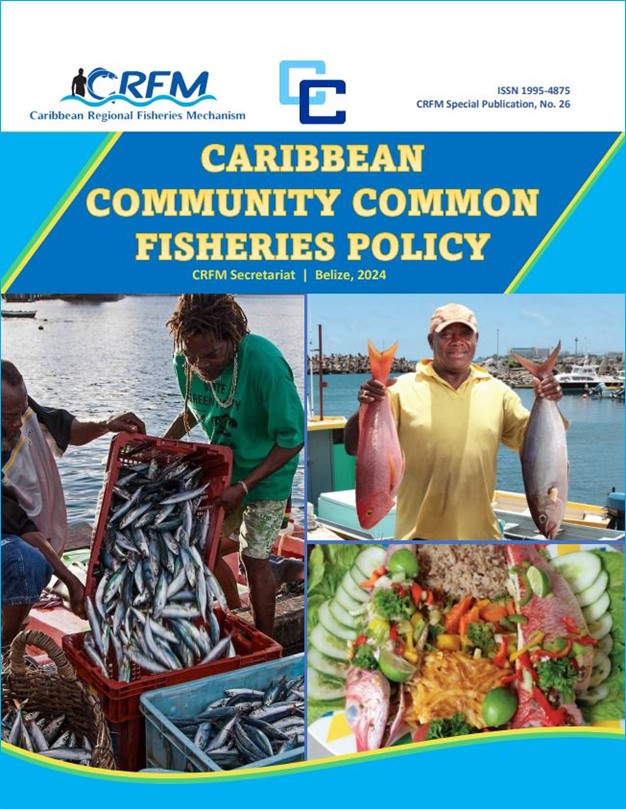
- The Protocol on Securing Sustainable Small-Scale Fisheries as the First Protocol under the Caribbean Community Common Fisheries Policy;
- The Protocol on Climate Change and Disaster Risk Management in Fisheries and Aquaculture under the Caribbean Community Common Fisheries Policy with the changes proposed by the Council;
- The Protocol on Aquatic Foods as a Strategic Resource for Food and Nutrition Security under the Caribbean Community Common Fisheries Policy; and
- The Protocol under the Caribbean Community Common Fisheries Policy on the Principle of Sustainable Use of Marine Living Resources for Blue Economic Growth and Sustainable Development of CRFM Member States.
At its meeting in April 2024, the Council urged all organs of the CRFM and its Member States to continue their collective efforts, in collaboration with regional and international development partners, to advance the implementation of the CCCFP, as well as the development of any and all additional protocols necessary to attain its stated vision and purpose.
To access the document, click here.
Vision 25 by 2025 CARICOM Initiative
Heads of Government of CARICOM have committed to reducing the Region’s large food import bill by 25% by 2025. The implementation of the CARICOM Agri-Food Systems Strategy in the Member States, is expected to help achieve this target, by giving special attention to priority crops and products which are highly imported products in the region.
"Generally, structural characteristics of our economies have meant that we import more than 60% of the food we eat, with some countries importing more than 80% of the food they eat. Over the period 2018-2020, the CARICOM food import bill was US$13.76 billion or approximately 5% of GDP.”
-- CARICOM Secretariat Secretary-General, Dr Carla Barnett, speaking at the opening of the Caribbean Investment Forum, November 2022
CARICOM's Vision 25 by 2025 Initiative
IS VISION 25 BY 2025?
CARICOM’s Vision 25 by 2025 is a long-term social and economic partnership among Member States, the Regional Private Sector (through the CARICOM Private Sector Organization-CPSO), Regional Organizations, Producer Groups, Development Partners, and Civil Society, which outlines actions and critical areas of intervention to tackle the region’s rising food import bill, improve intra-regional trade, and create wealth and economic opportunities for every CARICOM Member State.
The Special Ministerial Taskforce on Food Production and Food Security (MTF) guides the implementation of VISION 25 BY 2025. The MTF is made up of Ministers of Agriculture from throughout the region who meet monthly to provide guidance on the transformation of the agri-food system, to one that is resilient, provides attractive and sustainable wealth creation opportunities for potential investors, and guarantees food and nutrition security for the Member States.
The CRFM - Accelerating Vision 25 by 2025
CRFM Member States export approximately US$295 million worth of fish and other seafood products, but our imports within this category are valued at US$387 million. Intraregional trade accounts for approximately 20% of this overall trade, so there is much room for improvement. To achieve our target in the Fisheries and Aquaculture sector, we need to reduce imports by at least US$78 million, bringing imports to US$235 million.
Several actions have been advanced by the CRFM towards attaining this VISION 25 BY 2025 mandate, to narrow the trade gap between imports and exports, especially through the promotion of intraregional trade, which remains a high priority for our region.
CRFM MINISTERIAL COUNCIL DECISIONS
Among the matters prioritized by the CRFM Ministerial Council during its 18th regular Meeting held in April 2024 is the mandate by the CARICOM Heads of Government at the Thirty-Third Inter-Sessional Meeting held in March 2022, to reduce region’s food import bill by 25% by the year 2025.
The Ministers recognized the continued support from CARICOM, Member States, the private sector (including fishers and factory processors), regional and international partners to enhance production and trade of fisheries and aquaculture products and to thereby reduce reliance on extra-regional trade.
The Council agreed that a regional project to address the constraints faced by regional marine capture fisheries and aquaculture processors should be developed for submission to potential funders at the earliest opportunity.
Finally, it reiterated its its commitment and support for the efforts of the CRFM/CARICOM Fisheries and Aquaculture Priority Commodity Working Group and Member States to reduce the imports of fish products into the Community by 25% by the year 2025 and to improve food and nutrition security, thereby ultimately improving the social and economic welfare of Caribbean people.
A year earlier, in April 2023, the CRFM Ministerial Council approved the Protocol to the Caribbean Community Common Fisheries Policy on Aquatic Foods as a Strategic Resource for Food and Nutrition Security.
The Ministerial Council also approved resolutions on Addressing the Constraints of Fisheries and Aquaculture as Priority Commodities to Achieving 25 by 25 and on blue economic growth through sustainable seafood value chain development.
The CRFM commenced work in 2023 with the Caribbean Network of Fisherfolk Organisations to develop an action plan to work towards the CARICOM food production goal through increasing sustainable production of fish and other aquatic foods. The Council received and approved the implementation of the CNFO/CRFM Small-Scale Fisheries Action Plan 2023-2025: Contributing to Achieving the 25% Reduction of CARICOM’s Food Import Bill by the year 2025, plan in April 2024.
The CRFM must continue to promote the sustainable development of aquaculture, through new initiatives to advance the implementation of the CRFM’s 5-year Work Plan for Aquaculture Development. This will enhance the contribution of aquaculture to food and nutrition security, job creation, trade, and blue economic growth, and reduce pressure on nearshore fisheries through exploring integrated multi-trophic aquaculture and expanding mariculture.
CNFO/CRFM Small-Scale Fisheries Action Plan 2023-2025
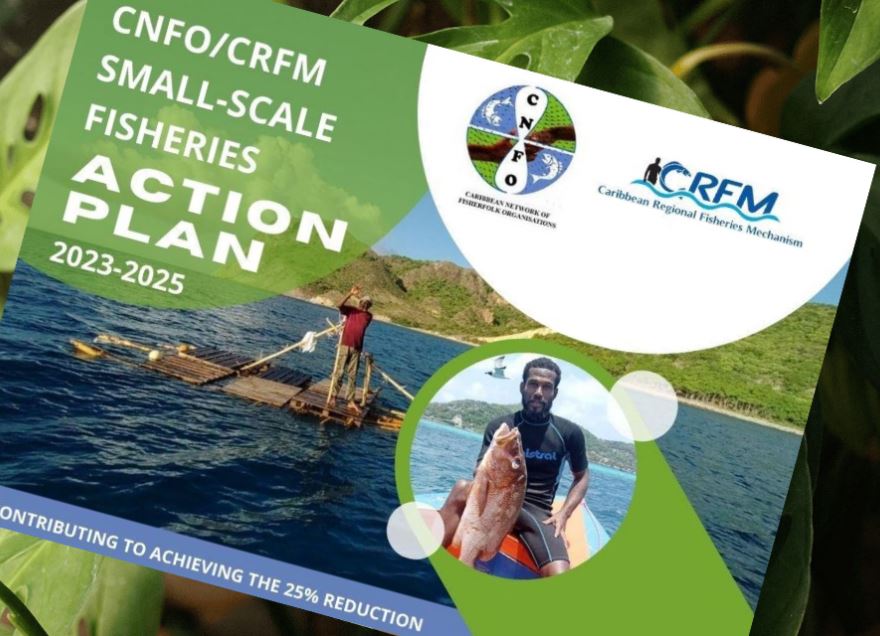
Contributing to Achieving the 25% Reduction of CARICOM’s Food Import Bill
CRFM action is partnering with the Caribbean Network of Fisherfolk Organisations (CNFO) to implement a number of initiatives, including the CNFO/CRFM Small-Scale Fisheries Action Plan 2023-2025. This is a plan that aims to contribute to achieving the 25% reduction of CARICOM’s food import bill by the year 2025.
The CRFM plays a supportive role in working with the CNFO to secure sustainable fisheries management and development. The CRFM Secretariat, CNFO, and regional development partners have been asked by the CRFM Ministerial Council to develop project proposals for the implementation of the CNFO/CRFM Small-Scale Fisheries Action Plan 2023-2025. The Council underscored the need to promote the development of the CNFO, national fisherfolk organizations, and fishers across the region through networking, representation, and capacity building.
Promising Potential: New Plant Enhancer from Sargassum Seaweed
“Since the COVID-19 pandemic, the cost of fertilizers has skyrocketed, and farmers across the region need more affordable, high-quality fertilizers to improve their yields, especially in the stressful environment brought about by warmer temperatures and drought conditions. Anything that we can do to improve the supply and reduce costs and dependence on imports will be impactful.”
-- Milton Haughton, Executive Director, CRFM Secretariat
 We are working towards developing a prototype plant enhancer or biostimulant to boost agricultural production under the regional Sargassum Products for Climate Resilience Project, funded by the New Zealand Ministry of Foreign Affairs and Trade. This initiative is being implemented by the Caribbean Regional Fisheries Mechanism (CRFM) and the New Zealand Institute for Plant and Food Research Limited (PFR). The accompanying photo (courtesy M. Haughton) shows the outcome of the greenhouse trial with liquid organic fertilizer derived from Sargassum.
The project has the potential to support a reduction in production costs through substituting for high-cost fertilizer imports. This can also contribute towards Vision 25 by 2025 by supporting agricultural production for increased food production, food security, and food sovereignty.
Vision 25 by 2025 YouTube Playlist
Regional Workshop on Fisheries Subsidies Agreement being convened in Barbados

Belize City, Monday, 25 March 2024 (CRFM)—As the global discussion continues on the elimination of harmful subsidies to the fisheries sector, following the adoption of the World Trade Organization (WTO) Agreement on Fisheries Subsidies at the 12th WTO Ministerial Conference on 17 June 2022, Caribbean countries have been engaged on its far-reaching implications. The WTO Agreement sets new, binding, multilateral rules to curb harmful subsidies, which are a key factor in the widespread overfishing of the world’s fish stocks. Specifically, the Agreement prohibits subsidies for illegal, unreported and unregulated (IUU) fishing, for utilizing overfished stocks, and for fishing on the unregulated high seas. Implementation of this Agreement will contribute to the fulfillment of United Nations Sustainable Development Goal target 14.6.
The Caribbean Regional Fisheries Mechanism (CRFM), the CARICOM Secretariat, the Caribbean Development Bank (CDB), and WTO are co-hosting the 2nd Regional Technical Workshop on the Ratification and Implementation of the Fisheries Subsidies Agreement in CARICOM Member States. The purpose of the event—which is bringing together Caribbean senior Trade and Fisheries officials and representatives from partner organizations in Bridgetown, Barbados, from 25-26 March 2024—is to provide resources and tools to guide ratification and implementation of the WTO Agreement on Fisheries Subsidies.
The Technical Workshop will also help to chart a way forward for the implementation of the Agreement and strengthen the capacity of national Fisheries and Trade Officials to implement the Agreement. It will also build upon the outcomes of the first technical workshop on Fisheries Subsidies for the Caribbean region held in Port of Spain, Trinidad and Tobago, 17-19 January 2023. The ongoing second wave of fisheries subsidies negotiations, which seek to develop additional provisions on subsidies that contribute to overcapacity and overfishing, will also be discussed, with reference to the recently held 13th WTO Ministerial Conference in Abu Dhabi.

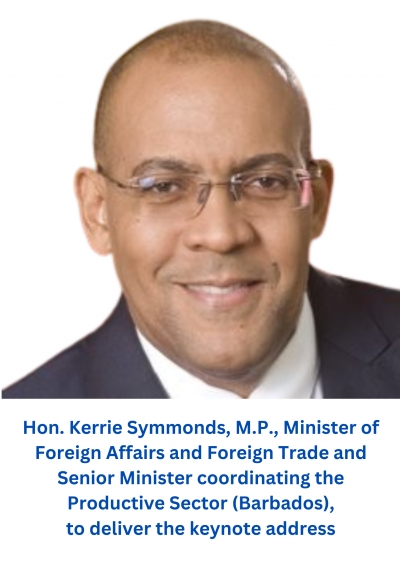
The Keynote Speaker for the Opening Ceremony will be the Hon. Kerrie Symmonds, M.P., Minister of Foreign Affairs and Foreign Trade and Senior Minister coordinating the Productive Sector, of Barbados. Ambassador Wayne McCook, Assistant Secretary-General, CARICOM Single Market and Trade, and Therese Turner-Jones, Vice-President (Operations)(Ag.) at the Caribbean Development Bank, will also deliver remarks during the Opening Ceremony.
Milton Haughton, Executive Director, CRFM Secretariat, will also present remarks during the Opening Ceremony and later lead off the technical engagement with a presentation on Sustainable Fisheries Management and Development in the Caribbean in the context of fisheries subsidies. Clarisse Morgan, Director - Rules Division at the WTO Secretariat, will deliver remarks as well as an Overview of the WTO Agreement on Fisheries Subsidies, and Chantal Ononaiwu, Director of External Trade at the CARICOM Secretariat, will present on the second wave of negotiations on Fisheries Subsidies.
As of 12 March 2024, 71 countries had ratified the WTO Fisheries Subsidies Agreement, including five (5) CRFM Member States: Barbados, Belize, Dominica, Haiti, and Saint Lucia. According to the World Trade Organization, for the Agreement to enter into force, two-thirds of WTO members (or 109 countries) must formally accept the Agreement on Fisheries Subsidies by depositing an “instrument of acceptance” with the WTO. Once the Agreement enters into force, it will remain open for acceptance by any other WTO member and will take effect for that new signatory as soon as its instrument of acceptance is deposited with the WTO.
Member States will speak on their internal processes and approaches towards ratification and implementation of the WTO Agreement, including any challenges experienced. International and regional organizations providing technical assistance and capacity building support will provide details on opportunities available to support countries with implementation of the agreement once it has come into force.
This week’s technical workshop also provides a forum for other regional and international organizations, fisherfolk, donors, non-CARICOM countries, and private sector representatives who would be directly or indirectly impacted by the Subsidies Agreement to be engaged on this critical matter.
It is expected that at the conclusion of the 2nd Regional Technical Workshop on the Ratification and Implementation of the WTO Fisheries Subsidies Agreement, Caribbean countries will be better equipped to chart the way forward for the ratification and implementation of the Agreement.
—Ends—
CRFM Ministerial Council holds 17th Meeting
Belize City, Friday, 28 April 2023 (CRFM)—The Ministerial Council of the Caribbean Regional Fisheries Mechanism (CRFM), comprised of Ministers responsible for fisheries from across the Caribbean Community, met on Thursday, 27 April 2023, to chart the way forward for the revitalization and expansion of the region’s fisheries and aquaculture sector—a goal which lies at the heart of the CRFM’s observance of its 20th Anniversary this year. During Thursday’s deliberations, the Ministers approved 32 resolutions, as they reviewed progress and mapped out sustainable solutions to challenges such as fisheries management; illegal, unreported and unregulated fishing and fisheries crime; climate change and ocean acidification; imbalances in international trade; and Sargassum influxes which are expected to reach record levels this year. Furthermore, the Ministers provided guidance and policy direction to the CRFM Secretariat and Member States on harnessing the opportunities arising in the emerging Blue Economy, through initiatives such as a new multimillion-dollar regional project to promote blue economic growth.
Hon. Avinash Singh, Minister in the Ministry of Agriculture, Land and Fisheries, Trinidad and Tobago, chaired the Seventeenth Meeting of the CRFM Ministerial Council. Trinidad and Tobago took over the reins of the Council from Hon. Parmanand Sewdien, Suriname’s Minister of Agriculture, Fisheries and Animal Husbandry, for a one-year term.
Hon. Singh acknowledged the contributions of the CRFM Secretariat in providing technical support to the Ministers during the proceedings, and for making impactful representations for Member States that benefit the entire region. He added that he looked forward to a very productive term ahead, as the CRFM continues to navigate the waters, in providing a sustainable future for the younger generations to follow.
Ministers map out sustainable solutions to challenges such as fisheries management, climate change, capacity building, imbalances in international trade, and Sargassum influxes

CARICOM countries depend on fishing for food, social welfare, employment, and much more (Photo: CRFM)
At their meeting on Thursday, the Ministers adopted the Protocol to the Caribbean Community Common Fisheries Policy on Aquatic Foods as a Strategic Resource for Food and Nutrition Security—the third protocol adopted under the regional fisheries policy. The protocol’s objective is to recognize, promote, and support the sustainable use of fish, shellfish, marine plants and seafood as a strategic resource for food and nutrition security for the peoples of the Caribbean.
Although fish production in our region is expanding, the Caribbean is still a major importer of fish and seafood. However, CRFM’s Executive Director, Mr. Milton Haughton, noted that there are projects and initiatives being implemented that should improve availability and access to safe and affordable fish and seafood to the people of the region. He announced that a US$48 million project—the CAF/FAO/CRFM/GEF/Caribbean Blue Economy Project entitled, Promoting National Blue Economy Priorities Through Marine Spatial Planning in the Caribbean Large Marine Ecosystem Plus or the BE-CLME+ Project—should commence around July 2023. The Fisheries Ministers welcomed the final approval of the Project Document by the Global Environment Fund (GEF) in November 2022, paving the way for the disbursement of funds and commencement of the project. The funding includes a US$25 million line of credit co-financed by the Development Bank of Latin America (CAF) for fisheries enterprises in the private sector to upgrade their capacities and develop fisheries value chains.

Mr. Milton Haughton, Executive Director,
Caribbean Regional Fisheries Mechanism (Photo: CRFM)
The Ministers also welcomed the updates on the efforts by the Caribbean Regional Fisheries Mechanism and the New Zealand Plant and Food Research (PFR), under the project entitled, Sargassum Products for Climate Resilience in the Caribbean. With support from New Zealand, technical experts in agronomy, technology, engineering and business development, the CRFM and PFR are pursuing the production of liquid fertilizers, compost, and other potential products, while ensuring that any health risks associated with doing so are eliminated through the processing of the Sargassum. Haughton noted that there is a great need for affordable fertilizers for agriculture, much of which is imported. The University of the West Indies and Caribbean Agricultural Research and Development Institute (CARDI) are key partners in this initiative. The intention is to develop processes, technologies, products, and business models that can be made available to potential entrepreneurs from the region, thereby creating jobs and economic activities while mitigating the negative environmental, health and socio-economic impacts of the Sargassum seaweed.
The Ministers issued a strong resolution establishing a roadmap to strengthen measures to prevent “ghost fishing” or abandoned, lost and otherwise discarded fishing gear (ALDFG), which is one of the most harmful forms of marine debris. Since 2018, the CRFM and the Global Ghost Gear Initiative (GGGI) have collaborated on prevention, mitigation, remediation, predictive modeling and capacity sharing work in the Caribbean. The CRFM Secretariat will now execute a Memorandum of Understanding with the GGGI for enhanced cooperation and coordination in addressing ghost fishing in the region.

Sargassum sampling for testing off the coast of Belize in 2021, during phase 1 of the project (Photo: CRFM)
The Ministers commended the CRFM Secretariat and international development partners for the significant work done and outputs achieved during the past programme year. This body of work included various policies developed and adopted, projects advanced, technical publications completed, training and capacity building support provided, and advances in combating illegal, unreported and unregulated fishing and fisheries crime, improving sanitary and phytosanitary systems, strengthening data and information systems, as well as significant contributions to international processes.
This included the World Trade Organization (WTO) Agreement on Fisheries Subsidies, which was adopted on 17 June 2022, after 21 years of talks. The Ministers urged Member States to take the necessary actions to accept and implement the agreement as soon as possible. However, they are asking Member States to consult all key stakeholders to ensure that all relevant issues are taken into account and that the full implications of the agreement are understood prior to accepting and enshrining it into national law or policies. They furthermore urged Member States to continue working with the CARICOM and CRFM Secretariats in the process of acceptance and implementation of the agreement, and also the future negotiations to address the remaining issues and gaps that could not have been addressed when the current agreement was concluded in 2022.
The Ministers also took note of the recent conclusion of international negotiations that resulted in the formulation of the UN Agreement on Biodiversity in Areas Beyond National Jurisdiction in March 2023, and they urged Member States to take advantage of the opportunities to obtain tangible, sustainable benefits from the biodiversity in the marine areas beyond national jurisdiction.
The Fisheries Ministers welcomed the development of the Regional Strategic Framework for Cooperation between the International Atomic Energy Agency (IAEA) and CARICOM Member States (2020-2026). The Ministers are asking the CRFM Secretariat to work with the IAEA, which has the largest marine lab in the world, located in Monaco, and other regional partners to facilitate and coordinate cooperation activities in fisheries management, aquaculture development, marine biodiversity conservation, ocean acidification, combatting illegal, unreported, and unregulated fishing and seafood fraud, and other relevant areas where the expertise of IAEA can add value.
The policymakers also endorsed the Convention on Biological Diversity Global Biodiversity Framework , which was adopted by the 15th Conference of Parties to the Convention in December 2022. The Convention on Biological Biodiversity is a global treaty adopted at the United Nations Conference on Environment and Development in 1992. The framework sets out the global biodiversity agenda for the next decade, with the overarching goal of living in harmony with nature by 2050—a vision which the CARICOM Fisheries Ministers also endorsed.
The Council reviewed the status of a request made to FAO and reaffirmed the priority accorded to that request, for securing the services of the modern Norwegian marine survey vessel, the Dr. Fridtjof Nansen, to conduct a comprehensive survey of the marine resources in the offshore waters of CARICOM States, to support blue economic development and sustainable use of the living marine resources.
The Council is due to meet again in special session in October 2023.
– ENDS –
CRFM joins CARICOM in celebrating its 49th year
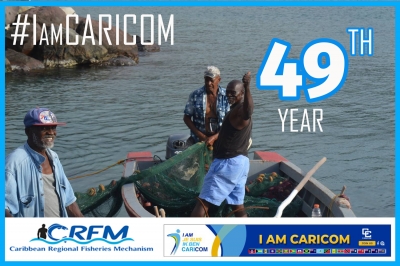
The Caribbean Regional Fisheries Mechanism (CRFM) joins the Caribbean Community (CARICOM) in celebrating its 49th year of existence! CARICOM's establishment on July 4, 1973 paved the way for the creation of this vibrant regional community, which we now serve. The CRFM is a specialized CARICOM Institution which was established in 2002 by CARICOM Heads of States, to promote sustainable use of the living marine and other aquatic resources by the development, efficient management, and conservation of such resources. We are committed to working together with all CARICOM Institutions, Member States and People to realize the vision & objectives of the integration process, towards socio-economic development and improving the quality of life of the People in the community.
OUR VISION
Effective management, conservation and sustainable use of fisheries and aquaculture to maximize social and economic benefits in the CRFM Member States.
OUR MISSION
Promote and facilitate responsible and sustainable use of the region’s fisheries and other living aquatic resources for improved food security, livelihood, and welfare of the people of the region.
OUR ULTIMATE OUTCOMES
▪ Sustainable growth for all CARICOM Member States
▪ Reduced environmental vulnerability
▪ Improved quality of life for all the Community
▪ An integrated Community with equity for all
#IamCARICOM #CARICOMDAY2022

CARICOM States sign International Declaration on Transnational Organized Crime in the Global Fishing Industry
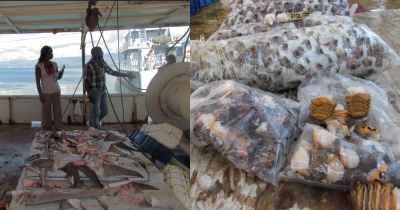
Belize City, Friday, 8 October 2021 (CRFM)—The Caribbean Regional Fisheries Mechanism (CRFM), an inter-governmental organization of the Caribbean Community (CARICOM), announced this week that several of its Member States in the CARICOM region had signed The International Declaration on Transnational Organized Crime in the Global Fishing Industry, also known as the ‘Copenhagen Declaration’. The countries simultaneously affirmed their resolute support to combat Illegal, Unreported and Unregulated (IUU) Fishing and transnational organized crime in the fishing industry by supporting the Declaration and the Blue Justice Initiative. The Initiative will help to strengthen cooperation among countries and build capacity to address transnational organized crime in the global fishing industry and to combat IUU Fishing.
Speaking at a regional meeting of CARICOM Ministers responsible for Fisheries and Blue Economic Growth on Monday, 4 October 2021, Hon. Saboto S. Caesar, Chair of the CRFM Ministerial Council, and Minister of Agriculture, Forestry, Fisheries, Rural Transformation, Industry and Labor, Saint Vincent and the Grenadines, described the situation as “a very difficult problem,” adding that much needs to be done to tackle this growing threat that has been undermining the progress of the region.

Hon. Saboto Caesar hosts high-level Ministerial Meeting.
“Available data indicate that IUU fishing accounts for up to 30% of the total global catch, valued at several billions of US dollars…,” Minister Caesar said, adding that “There is a growing body of evidence showing that drug traffickers, human traffickers, small arms traffickers, and traders in contraband goods, among others, are using fishing as a cover to conduct their nefarious activities.”
Minister Caesar said that the CRFM Member States are very grateful for the support and leadership being provided by the Government of Norway in tackling the problem, through efforts such as the Blue Justice Initiative and the Blue Resilience Project.
“We recognize the value of the International Declaration on Transnational Organized Crime in the global fishing industry that was done in Copenhagen, Denmark, in October 2018. It provides a solid framework for countries like ours in the Caribbean to work together with regional and international partners to better understand the problem, share information, and build the necessary legal, regulatory, monitoring, control, surveillance, and enforcement capacity to defeat and eradicate transnational organized crime and IUU fishing," Minister Caesar said.
The CRFM Ministerial Meeting was convened during the 16th Annual Caribbean Week of Agriculture to provide an opportunity for Caribbean countries to formally express their support by signing the declaration. Even ahead of the meeting with representatives from the Government of Norway, the CARICOM Secretariat, and other regional and international development partners, CRFM Member States began to express their resounding support for the instruments, and the Ministerial Council issued a resolution after its 15th Meeting held in May 2021, setting the stage for this week’s milestones.
Member States have attested to the monumental cost of IUU fishing to the region. Hon. Audley Shaw, Minister of Agriculture and Fisheries, Jamaica, detailed the quantifiable cost on Jamaica’s economy, which has lost billions of Jamaica dollars in earnings as well as thousands of jobs. The devastation caused by IUU fishing forced a 2-year moratorium on the queen conch fishery, implemented from 1 February 2019 to 31 March 2021, to allow the fishery time to recover.
“As it relates to queen conch fishing, it is estimated that over the last 20 years (since the year 2000), Jamaica has lost at least US$284 million due to foreign IUU fishing,” said Minister Shaw, who provided a conservative estimate based on illegal foreign motor fishing vessels caught in Jamaican waters and an extrapolation of the estimated average rate of poaching.
“The closure of the queen conch fishery possibly resulted in annual losses of approximately US$6 million in direct export earnings and loss of jobs for some 5,500 Jamaicans. The multiplier effect, resulting from the loss of jobs and export earnings may be as much as US$20 million during the 2-year period,” Minister Shaw added.

Hon. Audley Shaw, Minister of Agriculture and Fisheries, Jamaica, detailed the quantifiable cost on Jamaica’s economy.
Jamaica was one of the 12 CRFM Member States which signed the Copenhagen Declaration en bloc this week and simultaneously endorsed the Blue Justice Initiative. As of Friday, 8 October 2021, 12 CRFM Member States had deposited signed instruments with the CRFM Secretariat in Belize City, Belize. Those Member States are The Bahamas, Belize, Grenada, Guyana, Jamaica, Montserrat, Saint Kitts and Nevis, Saint Lucia, Saint Vincent and the Grenadines, Suriname, The Turks and Caicos Islands, and Trinidad and Tobago.
"We need to continue to strengthen our collaboration, and I think we will begin to turn the tide on this very difficult issue that we are dealing with—of unlawfulness in the fishing industry and the depletion and degradation of our resources—and to sustainably use and develop these resources for the benefit of our people,” CRFM Executive Director, Mr. Milton Haughton, said, in addressing the Ministers.
Mr. Haughton added that going forward, the CRFM Secretariat will be collaborating with the UNDP and officials from Norway to organize a regional workshop involving technical officials from the Fisheries Departments and Maritime Security Agencies from Member States and Regional Institutions, to map out future needs and identify at least one high priority intervention to be supported under the Blue Justice Initiative.
“This is exciting! I want to take this opportunity to thank all the countries, the Ministers, and the Permanent Secretaries, that signed on to the declaration ... I also want to thank our colleagues from Norway, UNDP, FAO, UNODC, as well as our regional partners: CARICOM IMPACS and the Regional Security System (RSS) for the excellent support and collaboration," the CRFM Executive Director said in closing the meeting.
CRFM Resource Mobilization Strategy
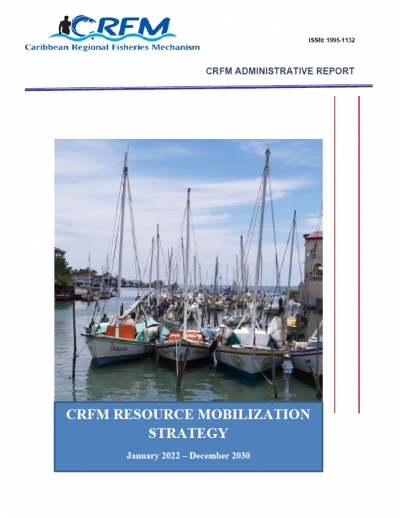
The overall objective of the CRFM Resource Mobilization Strategy is to ensure that there is a clear, systematic, predictable, coordinated approach to soliciting, acquiring, managing, reporting, monitoring, and evaluating the use of funds and assistance received from donors and International Development Partners, and for expanding and strengthening the relationship between the CRFM and donors to ensure adequate and sustainable resources are availability to support implementation of the policies, programmes and strategic plans approved by the Ministerial Council.
These include the commitments laid down in the Agreement establishing the CRFM, The Caribbean Community Common Fisheries Policy and its Protocols, the CRFM Strategic Plans, and other approved regional policy documents. To achieve this, the CRFM will need sufficient, predictable and sustained contributions in the form of funds and technical assistance from Member States, bi-lateral and multi-lateral donors and regional and international development partners.
DOWNLOAD AN ELECTRONIC COPY | 896KB
Read online using the version below:
Third CRFM Strategic Plan (2022-2030)
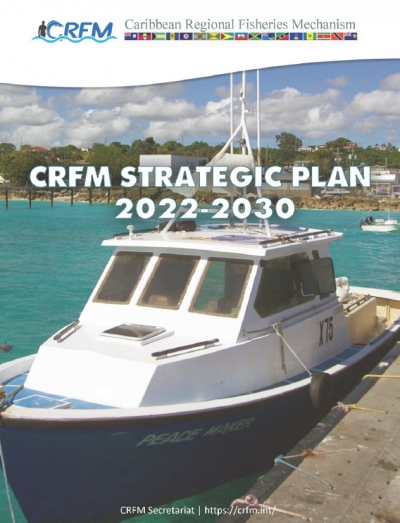
The Third CRFM Strategic Plan (2022-2030) sets out a clear roadmap for achieving the CRFM's vision of effective management, conservation and sustainable use of our fisheries and aquaculture resources, to maximise social and economic benefits in the CRFM Member States. The Plan was approved by the Eleventh Special Meeting of the Ministerial Council held on 4 October 2021.
DOWNLOAD AN ELECTRONIC COPY | 1.59 MB
Read online using the version below: